 |
Medieval Weapons & Armour |
   |
| MEDIEVAL WARFARE |
MEDIEVAL WEAPONS |
MEDIEVAL ARMOUR |
CRUSADES
& CRUSADERS |
TEMPLARS
& HOSPITALLERS |
WILLIAM MARSHAL |
MEDIEVAL LIFE |
MEDIEVAL RE-ENACTMENT |
MEDIEVAL TORTURE |
BOOKS |
 |
|
|
|
|
|
|||||||||||||||||||||||||||||||||||||||||||||||||||||||||||||||||||||||||||||||||||||||||||||||||||||
|
|
|
|
|
 |
||||||||||||||||||||||||||||||||||||||||||||||||||||||||||||||||||||||||||||||||||||||||||||||||||||||
|
|
Medieval weaponry spanned a range from simple tools and farm implements to sophisticated siege engines.
Here are some of the main wepons used in the Middle Ages (described in detail below).
|
|
||||||||||||||||||||||||||||||||||||||||||||||||||||||||||||||||||||||||||||||||||||||||||||||||||||||||
|
||||||||||||||||||||||||||||||||||||||||||||||||||||||||||||||||||||||||||||||||||||||||||||||||||||||||||
Swords.A sword is a long, edged piece of forged metal, used in many civilisations throughout the world, primarily as a cutting or thrusting weapon and occasionally for clubbing. The word sword comes from the Old English sweord, from a Proto-Indo-European root *swer- "to wound, to cut". A sword fundamentally consists of a blade and a hilt, typically with one or two edges for striking and cutting, and a point for thrusting. The basic intent and physics of swordsmanship have remained fairly constant through the centuries, but the actual techniques vary among cultures and periods as a result of the differences in blade design and purpose. Unlike the bow or spear, the sword is a purely military weapon, and this has made it symbolic of warfare or naked state power in many cultures. The names given to many swords in mythology, literature, and history reflect the high prestige of the weapon. Swords can be single or double-bladed edges. The blade can be straight or curved.
|
|
|||||||||||||||||||||||||||||||||||||||||||||||||||||||||||||||||||||||||||||||||||||||||||||||||||||||||
|
|
||||||||||||||||||||||||||||||||||||||||||||||||||||||||||||||||||||||||||||||||||||||||||||||||||||||||||
Arming SwordsThe arming sword (also sometimes called a knight's or knightly sword) is the single handed cruciform sword of the High Middle Ages, in common use between ca. 1000 and 1350, remaining in rare use into the 16th century. Arming swords are generally considered to be descendant from the swords of the migration period and Vikings Typically used with a shield or buckler, the arming sword was the standard military sword of the knight (merely called a "war sword", an ambiguous title given to many types of swords carried for battle) until technological changes led to the rise of the longsword in the late 13th century. There are many texts and pictures depicting effective arming sword combat without the benefit of a shield. According to Medieval texts, in the absence of a shield the empty (normally left) hand could be used for grabbing or grappling opponents. The arming sword was overall a light, versatile weapon capable of both cut and thrust combat; and normally boasts excellent balance. Although a variety of designs fall under the heading of 'arming sword', they are most commonly recognised as single-handed double-edged swords that were designed more for cutting than thrusting. Most 12th-14th century blades seem to vary between 30 and 32 inch blades. As a rule, arming swords began to polarise in design forms from the late 12th century, becoming either increasingly squat and heavily pointed, or longer and heavier in design. This would seem to reflect two separate methods of adapting the arming sword to combat increasingly tough armour; either to make the blade sufficiently heavy-duty to inflict blunt trauma through the armour, or narrow-pointed enough to pierce it with a thrust. Arguably these two forms of blade evolve into the longsword, and the cinquedea. It is a common weapon in period artwork, and there are many surviving examples in museums. The arming sword was worn by a knight even when not in armour, and he would be considered 'undressed' for public if he were without it. The first longswords were actually little more than two-handed arming swords, but the difference in length grew substantially as time passed. Long after these larger weapons came into use, the arming sword was retained as a common sidearm, eventually evolving into the cut & thrust swords of the Renaissance. Arming swords are sometimes incorrectly referred to as longswords or broadswords (the former actually refers to a long-bladed two-handed sword and the latter to a type of broad-bladed basket-hilted sword popular in the 17th and 18th centuries). |
|
|||||||||||||||||||||||||||||||||||||||||||||||||||||||||||||||||||||||||||||||||||||||||||||||||||||||||
|
|
||||||||||||||||||||||||||||||||||||||||||||||||||||||||||||||||||||||||||||||||||||||||||||||||||||||||||
Swords.A sword is a long, edged piece of forged metal, used in many civilisations throughout the world, primarily as a cutting or thrusting weapon and occasionally for clubbing. The word sword comes from the Old English sweord, from a Proto-Indo-European root *swer- "to wound, to cut". A sword fundamentally consists of a blade and a hilt, typically with one or two edges for striking and cutting, and a point for thrusting. The basic intent and physics of swordsmanship have remained fairly constant through the centuries, but the actual techniques vary among cultures and periods as a result of the differences in blade design and purpose. Unlike the bow or spear, the sword is a purely military weapon, and this has made it symbolic of warfare or naked state power in many cultures. The names given to many swords in mythology, literature, and history reflect the high prestige of the weapon. Swords can be single or double-bladed edges. The blade can be straight or curved.
|
|
|||||||||||||||||||||||||||||||||||||||||||||||||||||||||||||||||||||||||||||||||||||||||||||||||||||||||
BroadswordsThe term Broadsword defines a sword with a usually substantial, straight two-edged blade, and historically may refer to: Basket-hilted sword, a family of Renaissance cavalry and military swords. Such swords could have blades of broadsword form or backsword (single cutting edge) form. Broadswords were favoured in the Elizabethan period of England. In modern times, the term can also be used to refer to arming sword, the single-handed cruciform sword of the High Middle Ages. |
|
|||||||||||||||||||||||||||||||||||||||||||||||||||||||||||||||||||||||||||||||||||||||||||||||||||||||||
|
||||||||||||||||||||||||||||||||||||||||||||||||||||||||||||||||||||||||||||||||||||||||||||||||||||||||||
FalchionsA falchion ( from Old French fauchon, ultimately from Latin falx "sickle") is a one-handed, single-edged sword of European origin, whose design is reminiscent of the Persian scimitar. The weapon combined the weight and power of an axe with the versatility of a sword. Falchions are found in different forms from around the 11th century up to and including the sixteenth century. In some versions the falchion looks rather like the scramasax and later the sabre, and in some versions the form is irregular or like a machete with a crossguard. While some propose that encounters with the Islamic shamshir inspired its creation, these "scimitars" of Persia were not developed until long after the falchion. More likely, it was developed from farmer's and butcher's knives of the seax type or in the manner of the larger Messer. The shape concentrates more weight near the end, thus making it more effective for chopping strikes like an axe or cleaver. The blade designs of falchions varied widely across the continent and through the ages. They almost always included a single edge with a slight curve on the blade towards the point on the end and most were also affixed with a quilloned crossguard for the hilt in the manner of the contemporary long-swords. Unlike the double-edged swords of Europe, few actual swords of this type have survived to the present day; fewer than a dozen specimens are currently known. Two basic types can be identified Cleaver falchions : shaped very much like a large meat cleaver, or large bladed machete. Cusped falchions : The majority of the depictions in art reflect a design similar to that of the großes Messer. This blade style may have been influenced by the Turko-Mongol sabres that had reached the borders of Europe by the thirteenth century. This type of sword continues in use into the 16th. Century It sometimes presumed that these swords had a lower-than-average quality and status than the longer, more expensive swords. It is also possible that some falchions were used as tools between wars and fights, since they were very practical pieces of equipment. It is commonly thought that falchions were primarily a peasant's weapon[, but the weapon is commonly shown in illustrations of combat between mounted knights. Some later falchions were very ornate and used by the nobility. In particular, there is a very elaborately engraved and gold plated falchion from the 1560s in the Wallace Collection. This weapon is engraved with the personal coat of arms of Cosimo de' Medici, Duke of Florence. A number of weapons superficially similar to the falchion existed in Western Europe, including the Messer, hanger and the backsword. |
|
|||||||||||||||||||||||||||||||||||||||||||||||||||||||||||||||||||||||||||||||||||||||||||||||||||||||||
|
||||||||||||||||||||||||||||||||||||||||||||||||||||||||||||||||||||||||||||||||||||||||||||||||||||||||||
LongswordsThe Longsword is a type of European sword used during the late medieval period, approximately 1350 to 1550 (with early and late use reaching into the 13th and 17th centuries, respectively). Longswords have long cruciform hilts with grips over 10 to 15in length providing room for two hands. Straight double-edged blades are often over 1 m to 1.2 m (40" to 48") length, and weigh typically between 1.2 and 2.4 kg (2½ to 5 lb), with light specimens just below 1 kg (2.2 lb), and heavy specimens just above 2 kg (4½ lb). The longsword is commonly held in combat with both hands, though some may be used single-handed. Longswords are used for hewing, slicing, and stabbing. The specific offensive purpose of an individual longsword is derived from its physical shape. All parts of the sword are used for offensive purposes, including the pommel and crossguard. The French épée bâtarde references the bastard sword, a type of longsword. English Medieval and Renaissance manuscripts refer to the longsword as the two hand sword. The terms "hand-and-a-half sword", "greatsword", and "bastard sword" are used colloquially to refer to longswords in general. The longsword, with its longer grip and blade, appears to have become popular during the 14th century and remained in common use, as shown through period art and tale, from 1250 to 1550. The longsword was a powerful and versatile weapon. For close personal infantry combat, however, the longsword was prized for its versatility and killing capability. Hand and a half swords were so called because they could be either a one or two handed sword. While nearly every longsword is in some way different from one another, most contain a few essential parts. The blade of the sword forms the cutting portion of the weapon and is usually double-edged. Blades came in a variety of shapes and sizes. Broad and thin blades are more effective for cutting-oriented longswords while thick tapering blades are found on varieties more effective at thrusting. However, all longswords were effective at cutting, slicing and thrusting and variations in form made only minor alterations in use. The hilt comprises the portion of the sword that is not the blade. Like the blade, hilts evolved and changed over time in response to fashion and as the swords were designed for different specific purposes. The blade of the medieval longsword is straight and predominantly double edged. The construction of the blade is relatively thin, with strength provided by careful blade geometry. Over time, the blades of longswords become slightly longer, thicker in cross-section, less wide, and considerably more pointed. This design change is largely attributed to the use of plate armour as an effective defence, more or less nullifying the ability of a sword cut to break through the armour system. Instead of cutting, long swords were then used more to thrust against opponents in plate armour, requiring a more acute point and a more rigid blade. However, the cutting capability of the longsword was never entirely removed, as in some later rapiers, but was supplanted in importance by thrusting capability. Blades differ considerably in cross-section, as well as in length and width. The two most basic forms of blade cross-section are the lenticular and diamond. Lenticular blades are shaped like thin doubly convex lenses, providing adequate thickness for strength in the centre of the weapon while maintaining a thin enough edge geometry to allow a proper cutting edge to be ground. The diamond shaped blade slopes directly up from the edges, without the curved elements of the lenticular blade. The central ridge produced by this angular geometry is known as a riser, the thickest portion of the blade that provides ample rigidity. These basic designs are supplemented by additional forging techniques that incorporated slightly different variations of these cross-sections. The most common among these variations is the use of fullers and hollow-ground blades. While both of these elements concern themselves with the removal of material from the blade, they differ primarily in location and final result. Fullers are grooves or channels that are removed from the blade, in longswords, usually running along the centre of the blade and originating at or slightly before the hilt. The removal of this material allows the smith to significantly lighten the weapon without compromising the strength to the same extent, much as in the engineering of steel I-beams. Though colloquially called "blood-grooves", fullers were not designed, nor do they function, to allow blood to flow out of a wound more easily, nor to run off the sword. Fullers differ in number and thickness on swords, with some incredibly broad fullers spanning nearly the entire width of the weapon while smaller more numerous fullers are usually thinner. The length of fullers also displays variation - on some cutting blades the fuller may run nearly the entire length of the weapon, while the fuller stops one-third or half-way down other blades. Hollow-ground blades have concave portions of steel removed from each side of the riser, thinning the edge geometry while keeping a thickened area at the centre to provide strength for the blade. A variety of hilt styles exist for longswords, with the style of pommel and quillion (crossguard) changing over time to accommodate different blade properties and to fit emerging stylistic trends. Combat with the longsword was not so barbaric and crude as is often portrayed. Codified systems of fighting existed, with a variety of styles and teachers each providing a slightly different take on the art. The longsword was a quick, effective, and versatile weapon capable of deadly thrusts, slices, and cuts. The blade was generally used with both hands on the hilt, one resting close to or on the pommel. However, in some circumstances, the weapon may be used only with one hand. In a depiction of a duel, individuals may be seen wielding sharply pointed longswords in one hand, leaving the other hand open to manipulate the large dueling shield. Another variation of use comes from the use of armour. Half-swording was a manner of using both hands, one on the hilt and one on the blade, to better control the weapon in thrusts and jabs. This versatility was unique, as multiple works hold that the longsword provided the foundations for learning a variety of other weapons including spears, staves, and polearms.] Use of the longsword in attack was not limited only to use of the blade, however, as several Fechtbücher explain and depict use of the pommel and cross as offensive weapons. The cross has been shown to be used as a hook for tripping or knocking an opponent off balance. |
|
|||||||||||||||||||||||||||||||||||||||||||||||||||||||||||||||||||||||||||||||||||||||||||||||||||||||||
|
|
||||||||||||||||||||||||||||||||||||||||||||||||||||||||||||||||||||||||||||||||||||||||||||||||||||||||||
Daggers and Knives
A dagger is a double-edged blade used for stabbing or thrusting. Daggers often fulfill the role of a secondary defence weapon in close combat. In most cases, a tang extends into the handle along the centreline of the blade. Daggers may be differentiated from knives in that daggers are intended primarily for stabbing whereas knives are usually single-edged and intended mostly for cutting. This distinction is confused by the fact that many knives and daggers are capable of either stabbing or cutting. Historically, knives and daggers were always considered secondary or even tertiary weapons. Most cultures mainly fought with pole weapons, swords, and axes at arm's length if not already utilizing bows, spears, slings, or other long-range weapons. From the year 1250 onward, gravestones and other contemporary images show knights with a dagger or combat knife at their side. Hilt and blade shapes began to resemble smaller versions of swords and led to a fashion of ornamented sheaths and hilts in the late 15th century. This is also a symbol of the church because the dagger look much like a cross. With the advent of protective plate armour during the Middle Ages, the dagger became increasingly useful as a good close in weapon for stabbing through the gaps in armour. Books offering instruction on the use of weapons described the dagger being held in the hand with the blade pointing from the heel of the hand and used to make downward jabs. Straight jabs from a normal hammer grip were also used, though icepick style jabs are more commonly depicted in manuals. The dagger was a common murder weapon, used by commoners or vengeful aristocrats who wished to remain anonymous. With the development of firearms, the dagger lost more and more of its usefulness in military combat; multipurpose knives and handguns replaced them.
|
|
|||||||||||||||||||||||||||||||||||||||||||||||||||||||||||||||||||||||||||||||||||||||||||||||||||||||||
AnelacesAn anelace, also called an anlace, is a medieval long dagger r a very short type of sword. An anelace was sharp on both sides and could be carried at the small of the back or girdle. Two anelaces could be used in a paired fighting style similar to using a sword and parrying dagger. |
|
|||||||||||||||||||||||||||||||||||||||||||||||||||||||||||||||||||||||||||||||||||||||||||||||||||||||||
StilettosA stiletto is a short knife or dagger with a long slender blade of various designs primarily used as a stabbing weapon. Its narrow shape, ending in a rigid pointed end, allows it to penetrate deeply. Most stiletti are not suited for cutting, even with edged examples. A typical early stiletto had a one-piece cast-metal handle. The blade was hammer-forged in a triangular blade cross section without any sharpened edges. Other examples have round, square, and diamond cross sections. The Italian word "stiletto" comes from the Latin stilus meaning: "a stake; a pointed instrument". The stiletto, also called a misericorde ("mercy"), began to gain fame during the High Middle Ages, when it was the secondary weapon of knights. It was used to finish off a fallen or severely wounded heavily armoured opponent. The pointed, stout blade could easily pass through most mail or find its way through gaps in a knight's plate armour. A severely wounded opponent, who was not expected to survive, would be given a "mercy strike" (French coup de grace), hence the name misericorde. This weapon could also be used as a means of killing an active adversary, as during a grappling struggle. The blade could be used against an opponent's face, or thrust through holes or weak points in armour, such as under the arm, with the aim of piercing the heart. The weapon was known from the 12th century and has appeared in the armaments of Germany and England. Later the Gunner's Stiletto became a tool for clearing cannon-fuse touch holes; used in the manner of an automotive oil dipstick, they were often scribed with marks indicating levels of powder charges for ranging distance. |
|
|||||||||||||||||||||||||||||||||||||||||||||||||||||||||||||||||||||||||||||||||||||||||||||||||||||||||
|
|
||||||||||||||||||||||||||||||||||||||||||||||||||||||||||||||||||||||||||||||||||||||||||||||||||||||||||
PoignardsA poignard, or poniard, originally a French word, is a lightweight dagger employed in the Middle Ages and the Renaissance. It was primarily used for stabbing in close quarters or in conjunction with a rapier. |
|
|||||||||||||||||||||||||||||||||||||||||||||||||||||||||||||||||||||||||||||||||||||||||||||||||||||||||
RondelsA rondel dagger or roundel dagger was a type of stiff-bladed dagger in Europe in the late Middle Ages (from the 14th century onwards), used by a variety of people from merchants to knights. It was worn at the waist and might be used as a utility tool, or worn into battle or a jousting tournament as a side-arm. The blade was typically long and slim, measuring 12 inches (30 cm) or more; the whole dagger might be as long as 20 inches (50 cm). Rondel means round or circular; the dagger gets its name from its round (or similarly shaped, e.g. octagonal) hand guard and round or spherical pommel (knob on the end of the grip). The blade was stiff, made from steel, and the tang extended through the handle, which was cylindrical, normally carved wood or bone. In profile, the blade was usually diamond-shaped, lenticular, or triangular. These blades would have a sharpened point, and either one or both edges would also be sharpened. They were principally designed for use with a stabbing action, either underarm, or over arm with a reverse grip. They would also have been used for cutting. The long straight blade would not have lent itself to a slashing or sabre action. Rondel daggers were ideal in battle for puncturing chain mail, and although they would not have been able to punch through plate armour, they could be forced between the joints in a suit of armour and helmets. This was often the only way in which a heavily armoured knight could be killed. A few examples also exist of four-edged rondel daggers, the blade having a cruciform profile. These blades would not have been suited for cutting, or use as a general utility tool; they would have been worn as a side-arm in battle. The rondel daggers which have survived and found their way into museums and collections are usually those with fine craftsmanship and often ornate decoration. The blades may be engraved, the grips ornately carved, and the hand guards and pommels highly decorated. In a scene from a miniature by Girat de Roussillon depicting the construction of twelve churches in France (c. 1448), merchants and tradesmen can be seen wearing rondel daggers at their waists. Before the 1400s, daggers were actually a peasant's weapon. However, in the 15th century they became the standard side-arm for knights, and would have been carried into battles such as the Battle of Agincourt in 1415. They were a knight's backup weapon to be used in hand to hand fighting, and as such one of their last lines of defence. Since they were able to penetrate a suit of armour (at the joints, or through the visor of the helmet), rondel daggers could be used to force an unseated or wounded knight to surrender, for a knight might fetch a good ransom. Daggers may also have been thrown at unseated enemy knights to force them to engage in battle, though a mace was perhaps better suited to this task. |
|
|||||||||||||||||||||||||||||||||||||||||||||||||||||||||||||||||||||||||||||||||||||||||||||||||||||||||
|
|
||||||||||||||||||||||||||||||||||||||||||||||||||||||||||||||||||||||||||||||||||||||||||||||||||||||||||
Blunt Hand Weapons;
|
|
|||||||||||||||||||||||||||||||||||||||||||||||||||||||||||||||||||||||||||||||||||||||||||||||||||||||||
Clubs and MacesA mace is a simple weapon that uses a heavy head on the end of a handle to deliver powerful blows. A development of the club, a mace differs from a hammer in that the head of a mace is radially symmetric so that a blow can be delivered equally effectively with any side of the head. A mace consists of a strong, heavy, wooden, metal-reinforced (or metal) shaft with a head made of stone, copper, bronze, iron, or steel. The head is normally about the same or slightly thicker than the diameter of the shaft and can be shaped with flanges or knobs to allow greater penetration of armour. The length of maces can vary considerably. The maces of foot soldiers were usually quite short (two or three feet, or 70 to 90 cm). The maces of cavalrymen were longer and better designed for blows from horseback. Two-handed maces could be even larger. During the Middle Ages metal Armour and chain mail protected against the blows of edged weapons and blocked arrows and other projectiles. Solid metal maces and war hammers proved able to inflict damage on well armoured knights, as the force of a blow from a mace is large enough to cause damage without penetrating the armour. One example of a mace capable of penetrating armour is the flanged mace. What makes a flanged mace different from other maces is the flanges, protruding edges of metal that allow it to dent or penetrate even the thickest armour. This variation of the mace did not become popular until significantly after knobbed maces. Although there are some references to flanged maces (bardoukion) as early as the Byzantine empire circa 900, it is commonly accepted that the flanged mace did not become popular in Europe until the 12th century. Maces, being simple to make, cheap and straightforward in application, were common weapons. Peasant rebels and cheap conscript armies often had little more than maces, axes and pole arms. Few of these simple maces survive today. Most examples found in museums are of much better quality and often highly decorated. A mace type commonly used by the lower classes, called the Holy Water Sprinkler, was basically a wooden handle with a wooden or metal head and radiating spikes; the name most likely originates from the similarity to the church object. A plançon a picot is a heavy and thick two-handed mace with an Armour-piercing spike on top. The mace was the usual weapon of the cavalieri, essentially mercenary armies of Northern Italy hired by Italian city-states and throughout Europe starting in the 14th Century. The production of both body armour and weaponry to support the cavalieri centred around Milan, partially in support of the Milanese movement to remain separate from Papal rule. Maces were employed by the clergy in warfare to avoid shedding blood (sine effusione sanguinis). Bishop Odo of Bayeux is shown wielding a club-like mace at the Battle of Hastings in the Bayeux Tapestry. Other Bishops were depicted bearing the arms of a knight without comment, such as Archbishop Turpin who bears both a spear and a sword named "Almace" in the The Song of Roland. Bishop Adhemar of Le Puy, fought as a knight during the First Crusade. Maces are rarely used today for actual combat, but government bodies, universities and other institutions have ceremonial maces used as symbols of authority, in rituals and processions, and for other purposes. Like many medieval weapons, maces have been used in blazons, either as a charge on the shield or as external ornament. |
|
|||||||||||||||||||||||||||||||||||||||||||||||||||||||||||||||||||||||||||||||||||||||||||||||||||||||||
Morning starThe morningstar is a medieval weapon consisting of a spiked club resembling a mace, usually with a long spike extending straight from the top and many smaller spikes around the particle of the head. The spikes distinguish it from a mace, which can have, at most, flanges or small knobs. It was used by both infantry and cavalry; the horseman's weapon had a shorter shaft. The mace, a traditional knightly weapon, developed independently, became all-metal with heads of various forms, while the morningstar retained its characteristic spikes, with a usually wooden shaft, often found in longer two-handed forms measuring up to six feet or more, was popular among troops. The morningstar first came into widespread use around the beginning of the fourteenth century, and the term is often applied to the military flail which consists of a wooden shaft joined by a length of chain to one or more iron balls or an iron shod wooden bar, in either case with or without spikes (heavy sword pommels have also been used as weights). Although it is often assumed that the morningstar was a crude peasant weapon, this is not entirely correct. There were three types in existence, all differing in quality of workmanship. The first was the well crafted military type used by professional soldiers, made in series by expert weaponsmiths for stocking in town arsenals. The second and much simpler type would have been hand cut by peasant militiamen, rather than turned on a lathe, from wood they had gathered themselves and fitted with nails and spikes by the local blacksmith. The shaft and head were usually of one piece but sometimes reinforced at the top with an iron band. The third type was decorative in nature, usually short hafted and made of metal, one sixteenth century example being of steel and damascened with inlaid gold and silver, in the Wallace Collection of London |
|
|||||||||||||||||||||||||||||||||||||||||||||||||||||||||||||||||||||||||||||||||||||||||||||||||||||||||
Holy Water SprinklersThe holy water sprinkler (from its resemblance to the aspergillum used in the Catholic Mass) was a morning star used by the English army in the sixteenth century and made in series by professional smiths. One such weapon can be found in the Royal Armouries and has an all steel head with six flanges forming three spikes each, reminiscent of a mace but with a short thick spike of square cross section extending from the top. The wooden shaft is reinforced with four langets and the overall length of the weapon is 74.5 inches (189.2 cm). The term can also be used to describe a type of military flail, this being the name for the weapon in French (goupillon) |
|
|||||||||||||||||||||||||||||||||||||||||||||||||||||||||||||||||||||||||||||||||||||||||||||||||||||||||
|
|
||||||||||||||||||||||||||||||||||||||||||||||||||||||||||||||||||||||||||||||||||||||||||||||||||||||||||
FlailsThe military flail or simply flail is a weapon commonly attributed to the Middle-Ages but for which only a limited amount of historical evidence currently exists for most of this era. In spite of the lack of frequent historial reference to use of flails, the weapon (sometimes called mace and chain or ball and chain) was a stock figure in Victorian Era Medievalist literature and thus has become entrenched in popular medieval fantasy and thus the neomedievalist imagination. Typically, the weapon is depicted as one (or more) weights attached to a handle with a hinge or chain. Modern authors have used multiple conflicting names for this weapon: the "mace and chain" is the equivalent of the German "morningstar and chain" referred to above, but the latter term is rarely used in English. Additionally, the English terms "morning star" (a rigid haft topped with a spiked ball), and even "mace" (a bludgeoning weapon similar to a morning star), which properly refer to non-chained weapons, have also been used to refer to the military flail. [citation needed] Throughout the Middle-Ages, agricultural flails were sometimes employed as an improvised weapon by peasant armies conscripted into military service or engaged in popular uprisings. Another in the Royal Armouries collection has two spiked iron balls attached by separate chains |
|
|||||||||||||||||||||||||||||||||||||||||||||||||||||||||||||||||||||||||||||||||||||||||||||||||||||||||
War HammersA war hammer is a late medieval weapon of war intended for close combat action, the design of which resembles the hammer. The war hammer consists of a handle and a head. The handle may be of different lengths, the longest being roughly equivalent to the halberd, and the shortest about the same as a mace. Long war hammers were pole weapons (polearms) meant for use against riders, whereas short ones were used in closer quarters and from horseback. Later war hammers often had a spike on one side of the head, thus making it a more versatile weapon. War hammers were developed as a consequence of the ever more prevalent surface-hardened steel surfacing of wrought iron armours of the late medieval battlefields during the fourteenth and fifteenth centuries. The surface of the armour was now as hard as the edge of a blade, so a blade tended to ricochet. Swords, or the blade of a battleaxe, were likely only to give a glancing blow, losing much of the impact, especially on the high curvature of the helmet. The war hammer could deliver the full force to the target. War hammers, especially when mounted on a pole, could damage without penetrating the armour. In particular, they transmitted the impact through even the thickest helmet and caused concussions. A blade or spike tended to be used against other parts of the body where the armour was thinner, and penetration was easier, than through the helmet. The spike end could be used for grappling the target's armour, reins, or shield, or could be turned in the direction of the blow to pierce even heavy armour. Against mounted opponents, the weapon could also be directed at the legs of the horse, toppling the armoured foe to the ground where he could be more easily attacked. |
|
|||||||||||||||||||||||||||||||||||||||||||||||||||||||||||||||||||||||||||||||||||||||||||||||||||||||||
Horseman's PicksThe horseman's pick was a weapon of Islamic origin used by cavalry during the Middle Ages in Europe. This was a type of war hammer that had a very long spike on the reverse of the hammer head. Usually this spike was slightly curved downwards, much like a miner's pickaxe. The term is sometimes used interchangeably with war hammer. The horseman's pick was often used as a means to penetrate thick armour or chain mail which the standard sword could not. However, a number of drawbacks limited the weapon's effectiveness. Its relative heaviness made it unwieldy and, thus, easily avoided. The injury caused by the weapon was also small and rarely immediately fatal. Additionally, if swung too hard the weapon often became embedded in the victim or their armour making retrieval difficult. It also could be used as a throwing weapon. |
|
|||||||||||||||||||||||||||||||||||||||||||||||||||||||||||||||||||||||||||||||||||||||||||||||||||||||||
|
||||||||||||||||||||||||||||||||||||||||||||||||||||||||||||||||||||||||||||||||||||||||||||||||||||||||||
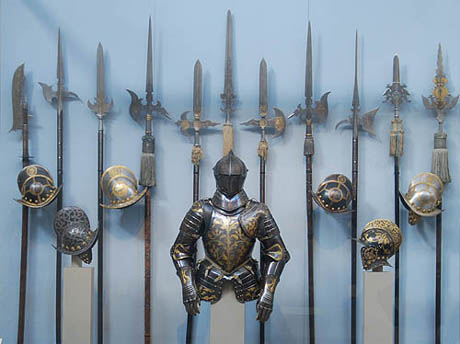
Pole ArmsA pole weapon or polearm is a close combat weapon in which the main fighting part of the weapon is placed on the end of a long shaft, typically of wood. The purpose of using pole weapons is either to extend reach or to increase angular momentum—and thus striking power—when the weapon is swung. The idea of attaching a weapon onto a long shaft is an old one, as the first spears date back to the Stone Age. Spears, glaives, poleaxes, halberds, and bardiches are all varieties of polearm. Staff-weapons in Medieval or Renaissance England were lumped together under the generic term "staves" Pole weapons are relatively simple to make, and easy for most people to use as they were often derived from hunting or agricultural tools. Massed men carrying pole weapons with pointed tips (spears, pikes, etc.) were recognised early in the history of organised warfare as effective military units. On defence the men holding the polearms were hard to reach; on the attack they were devastating to any units that could not get out of the way. With the advent of armoured fighters, especially cavalry, pole weapons frequently combined the spearpoint (for thrusting) with an axe or hammerhead for a swinging strike which could pierce or break armour. Today, the military use of pole weapons is restricted to ceremonial guards, such as the Papal Swiss Guard or Yeomen of the Guard. They also remain a common sight in many schools of martial arts that study weapons. The bayonet of a modern rifle (especially sword bayonet or knife bayonet), when attached, can still be regarded as a form of pole weapon.
|
|
|||||||||||||||||||||||||||||||||||||||||||||||||||||||||||||||||||||||||||||||||||||||||||||||||||||||||
QuarterstavesA quarterstaff is an English weapon that was used during the medieval period and up to the 18th Century. The term refers to a shaft of hardwood between five and seven feet in length, sometimes with metal tips, ferules or spikes. The origin of the weapon's name is uncertain. The name may come from the way that the staff is held: one hand at the centre of the staff, and one hand halfway between the centre and one end. However, this grip is not prescribed in early sources. Another theory links the word to its length being equal to the wielder's height plus another quarter. Swetnam writing in 1615 differentiates the quarterstaff of 6 or 7 feet in length from the long staff of 12 feet and the pike of 18 feet. Perhaps the most likely origin of the word is in its relationship to the "great" staff or pike, that was used to fight cavalry. Unlike its bigger cousin, a quarterstaff is literally one that is held and used in "close quarters" for personal combat, able to defend all four quarters of the body. A simple weapon to manufacture, the quarter staff has a long history of use, and a wide cultural dispersion. The quarterstaff proper was a common weapon in England, where it is featured in the Robin Hood legend as the favourite weapon of Little John. During the 1500s quarterstaves were favoured as weapons by the London Masters of Defence and by the 1700s the weapon was associated with gladiatorial prize playing. English fencing authors of the 16th to 18th Centuries insist that the quarterstaff is the most effective of all hand weapons and devote lengthy portions of their works to its use. The quarterstaff is held with the back hand at the butt end of the staff and the other hand about a foot above it, as a two-handed sword would be held. The body is turned so the forward hand and forward foot are both facing the opponent, the feet taking the same stance as is used in sword or rapier fighting. This basic position is known as the low guard. Assuming the butt is gripped with the left hand, moving the staff slightly to the right to defend blows is called the outside guard. Moving it slightly to the left is called the inside guard. Raising the butt end up and pointing the point of the staff at the opponent's face to parry a blow to the head is called the middle guard. Raising the staff directly back over the head letting the tip point back at the ground behind oneself and looking under the butt end of the staff in front of oneself is called the open or hanging guard. The George guard or St. George guard is formed by grasping the staff at the thirds and raising it horizontally overhead to ward a direct overhead downward blow. Of these the low guard is considered the central guard. Blows were primarily delivered downwards either directly or at angles. Parries of blows to the legs were done either by lifting the leg away from the line of attack or by thrusting one end of the staff into the ground and releasing the foremost hand which was in danger of being struck. Thrusts were often performed with the release of the forward hand and a step with the forward leg like a fencing lunge, stretching forward the back hand as far as possible. Longer thrusts were delivered with a full step forward with the back leg accompanying the back hand. It was recommended that when delivering a blow that at the end of it the back leg and foot should be compassed about so as to fall roughly into a line with the front foot and the point of the weapon. The same circling round of the back leg was applied to parries also. Singularly among the three authors, Swetnam recommends preference of thrusting over striking. Silver and Wylde describe striking and thrusting as equally valid attacks. |
|
|||||||||||||||||||||||||||||||||||||||||||||||||||||||||||||||||||||||||||||||||||||||||||||||||||||||||
Spears
Spears were one of the most common personal weapons from the Stone Age until the advent of firearms. They may be seen as the ancestor of such weapons as the lance, the halberd, the bill and the pike. One of the earliest weapons fashioned by human beings and their ancestors, it is still used for hunting and fishing. Its influences can still be seen in contemporary military arsenals as the rifle-mounted bayonet. Spears can be used as both ballistic and melee weapons. Spears used primarily for thrusting may be used with either one or two hands and tend to have heavier and sturdier designs than those intended exclusively for throwing. Those designed for throwing, often referred to as javelins, tend to be lighter and have a more streamlined head.. After the fall of the Roman Empire, the spear and shield continued to be used by almost all Western European cultures. Since a medieval spear required only a small amount of steel along the sharpened edges (most of the spear-tip was wrought iron), it was an economical weapon. Quick to manufacture, and needing less smithing skill than a sword, it remained the main weapon of the common soldier. The Vikings, for instance, though often portrayed with axe or sword in hand, were armed mostly with spears, as were their Anglo-Saxon, Irish, or continental contemporaries. Spears were either designed to be kept in hand (thrusting spears), or to be thrown (throwing spears). Within this simple classification, there were a remarkable range of types. Notable types of Early medieval spears include the Angon, a throwing spear with a long head like a Roman pilum used by the Franks and Anglo-Saxons and the winged (or lugged) spear, which had two prominent wings at the base of the spearhead, either to prevent the spear penetrating too far into an enemy or to aid in spear fencing . Originally a Frankish weapon, the winged spear was also popular with the Vikings. It would become the ancestor of later medieval polearms, such as the partisan and spetum. The thrusting spear also has the advantage of reach — being considerably longer than other weapon types. Exact spear lengths are hard to deduce as few spear shafts survive archaeologically but 6 ft. - 8 ft. (1.8m - 2.5m) would seem to be the norm. Some nations were noted for their long spears, including the Scots and the Flemish. Spears were usually used in tightly ordered formations, like the shieldwall or the schiltron To resist cavalry, spear shafts could be planted against the ground. William Wallace drew up his schiltrons in a circle at the Battle of Falkirk in 1298 to deter charging cavalry, but it was a widespread tactic, sometimes known as the "crown" formation Throwing spears became rarer as the Middle Ages drew on but survived in the hands of specialists such as the Catalan Almogavars. They were commonly used in Ireland until the end of the 16th. Century Spears began to lose fashion among the infantry in the 14th. Century, being replaced by pole weapons which combined the thrusting properties of the spear with the cutting properties of the axe, such as the halberd Where spears were retained they grew in length, eventually evolving into pikes which would be a dominant infantry weapon in he 16th. and 17th. centuries Cavalry spears were originally the same as infantry spears and were often used with two hands or held with one hand overhead. In the 11th. Century, after the adoption of stirrups and a high-cantled saddle, the spear became a more powerful weapon. A mounted knight would secure the lance by holding with one hand and tucking it under the armpit (the couched lance technique). This allowed all the momentum of the horse and knight to be focused on the weapon's tip whilst still retaining accuracy and control. This use of the spear spurred the development of the lance as a distinct weapon which was perfected in the medieval sport of jousting. In the 14th century, tactical developments meant that knights and men-at-arms often fought on foot. This led to the practice of shortening the lance to about 5 ft. (1.5m.) to make it more manageable. As dismounting became commonplace, specialist pole weapons such as the pollaxe were adopted by knights and this practice ceased The development of both the long, two handed pike and gunpowder in renaissance Europe saw an ever increasing focus on integrated infantry tactics. Infantry not armed with these weapons carried variations on the pole-arm, including the halberd and the bill. Ultimately, the spear proper was rendered obsolete on the battlefield. Its last flowering was the half-pike or spontoon, a shortened version of the pike carried by officers and NCOs. While originally a weapon, this came to be seen more as a badge of office, or leading staff by which troops were directed . The half-pike, also known as a boarding pike, was also used as a weapon on board ships until the 19th. Century At the start of the Renaissance, cavalry were still predominantly lance armed; gendarmes with the heavy knightly lance and lighter cavalry with a variety of lighter lances. By the 1540s, however, pistol-armed cavalry called reiters were beginning to make their mark. Cavalry armed with pistols and other lighter firearms, along with a sword, had virtually replaced lance armed cavalry in Western Europe by the beginning of the 17th. Century, though the lance persisted in Eastern Europe, from whence it was reintroduced into the European mainstream in the 19th. Century. |
|
|||||||||||||||||||||||||||||||||||||||||||||||||||||||||||||||||||||||||||||||||||||||||||||||||||||||||
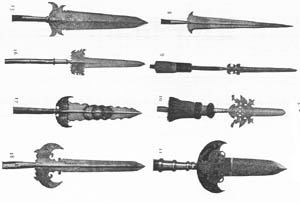
Winged SpearsThe winged (also lugged or barred) spear was a common type of thrusting spear during the early Middle Ages. It consisted of a leaf or lozenge shaped head, beneath which on the socket there were prominent wings. The earliest use of barred spears for hunting is recorded by Xenophon in the 4th. Century BC and illustrations of Roman examples are known[34]. Its use in war, however, seems to relate to German tribes in the Early Middle Ages, particularly the Franks[, and it was used by the Vikings. The type is commonly illustrated in Early Medieval Art, including the Bayeux Tapestry and the Golden Psalter of St. Gallen.. The winged spear is shown used by both cavalry and infantry. Although some authors claim the intention of the wings was to prevent the weapon from penetrating too deeply into an enemy, others see them as an aid to spear-fencing. In the later Middle Ages a number of polearms derived from the winged spear evolve. Some, such as the Bohemian ear spoon, differ little from the original. Weapons such as the Spetum, Ranseur, Corseque and Partisan show a greater evolutionary change. |
 |
|||||||||||||||||||||||||||||||||||||||||||||||||||||||||||||||||||||||||||||||||||||||||||||||||||||||||
LancesThe word lance is a catchall term for a variety of different pole weapons based on the spear. The name is derived from lancea, Roman auxiliaries' javelin.. A lance in the original sense is a light throwing spear, or javelin. The English verb to launch "fling, hurl, throw" is derived from the term (via Old French lancier), as well as the rarer or poetic to lance. The term from the 17th century came to refer specifically to spears not thrown, used for thrusting by heavy cavalry, and especially in jousting. A thrusting spear which is used by infantry is usually referred to as a pike. The Roman cavalry long thrusting spear was not called lance, but contus (from Greek language kontos, barge-pole). It was usually 3 to 4 m long, and grasped with both hands. It was used by equites contariorum and equites catafractarii, fully armed and armoured cataphracts. The use of the basic cavalry spear is so ancient, and warfare so ubiquitous by the beginning of recorded history, that it is difficult to determine which populations invented the lance and which learned it from their enemies or allies. The best known usage of military lances was that of the full-gallop closed-ranks and usually wedge-shaped charge of a group of knights with underarm-couched lances, against lines of infantry, archery regiments, defensive embankments, and opposition cavalry. It is commonly believed that this became the dominant European cavalry tactic in the 11th century after the development of the cantled saddle and stirrups and of rowel spurs which enabled better control of the mount. Cavalry thus outfitted and deployed had a tremendous collective force in their charge, and could shatter most contemporary infantry lines. While it could still be generally classified as a spear, the lance tends to be larger - usually both longer and stouter and thus also considerably heavier, and unsuited for throwing, or for the rapid thrusting, as with an infantry spear. Lances did not have spear tips that (intentionally) broke off or bent, unlike many throwing weapons of the spear/javelin family, and were adapted for mounted combat. They were often equipped with a vamplate, a small circular plate to prevent the hand sliding up the shaft upon impact. Though perhaps most known as one of the foremost military and sporting weapons used by European knights, the use of lances was spread throughout the Old World wherever mounts were available. As a secondary weapon, lancers of the period also bore swords, maces or something else suited to close quarter battle, since the lance was often a one-use-per-engagement weapon; after the initial charge, the weapon was far too long, heavy and slow to be effectively used against opponents in a melee. Because of the stopping power of a thrusting spear, it quickly became a popular weapon of footmen in the Late Middle Ages. These eventually led to the rise of the longest type of spears ever, the pike. Ironically, this adaptation of the cavalry lance to infantry use was largely tasked with stopping lance-armed cavalry charges. During the 15th, 16th and 17th centuries, these weapons, both mounted and unmounted, were so effective that lancers and pike men not only became a staple of every Western army, but also became highly sought-after mercenaries. In Europe, a jousting lance was a variation of the knight's lance which was modified from its original war design. In jousting, the lance tips would usually be blunt, often spread out like a cup or furniture foot, to provide a wider impact surface designed to unseat the opposing rider without spearing him through. The centre of the shaft of such lances could be designed to be hollow, in order for it to break on impact, as a further safeguard against impalement. They were often 4 m long or longer, and had special hand guards built into the lance, often tapering for a considerable portion of the weapon's length. These are the versions that can most often be seen at medieval re-enactment festivals. In war, lances were much more like stout spears, long and balanced for one handed use, and with sharp tips. The mounted lance saw a renaissance in the 18th century with the demise of the pike; heavily armoured cuirassiers used 2 to 3 m lances as their main weapons. They were usually used for the breakneck charge against the enemy infantry. The Crimean War saw the most infamous use of the lance, the Charge of the Light Brigade, though lances continued to be used into the twentieth century. |
|
|||||||||||||||||||||||||||||||||||||||||||||||||||||||||||||||||||||||||||||||||||||||||||||||||||||||||
|
|
||||||||||||||||||||||||||||||||||||||||||||||||||||||||||||||||||||||||||||||||||||||||||||||||||||||||||
PikesA pike is a pole weapon, a very long thrusting weapon used extensively by infantry both for attacks on enemy foot soldiers and as a counter-measure against cavalry assaults. Unlike many similar weapons, the pike is not intended to be thrown. Pikes were used by European troops from the early Middle Ages until around 1700, and wielded by foot soldiers deployed in close order. While the soldiers using such spears may not have called them "pikes", their tactical employment of these weapons ran along broadly similar lines. The pike was an extremely long weapon, varying considerably in size, from 3 to 6 metres (10 to over 20 feet) long. It had a wooden shaft with an iron or steel spearhead affixed. The shaft near the head was often reinforced with metal strips called "cheeks" or langets. When the troops of opposing armies both carried the pike, it often grew in a sort of arms race, getting longer in both shaft and head length to give one side's pikemen an edge in the combat; the longest pikes could exceed 6 m (22 feet) in length. The extreme length of such weapons required a strong wood such as well-seasoned ash for the pole, which was tapered towards the point to prevent the pike sagging on the ends, although this was always a problem in pike handling. The great length of the pikes allowed a great concentration of spearheads to be presented to the enemy, with their wielders at a greater distance, but also made pikes unwieldy in close combat. This meant that pikemen had to be equipped with a shorter weapon such as a sword, mace, or dagger in order to defend themselves should the fighting degenerate into a melee. In general, however, pikemen attempted to avoid such disorganised combat, at which they were at a disadvantage. To compound their difficulties in a melee, the pikeman often did not have a shield .. On the battlefield pikes were often used in "hedgehog" formations, particularly by troops such as rebel peasants and militias who had not received a great deal of training in tactical manoeuvres with the weapon. In these, the troops simply stood and held their pikes out in the direction of the enemy, sometimes standing in great circles or squares with the men facing out in all directions so that the enemy was confronted by a forest of bristling pikeheads, and could not attack the formation from the sides or rear. Better-trained troops were capable of using the pike in an aggressive attack, each rank of pikemen being trained to hold their pikes so that they presented enemy infantry with four or five layers of spearheads bristling from the front of the formation. As long as it kept good order, such a formation could roll right over enemy infantry, but had its own weaknesses – as the men were all moving forward, they were all facing in a single direction and could not easily turn to protect the vulnerable flanks or rear of the formation, and the huge block of men carrying such unwieldy spears could be difficult to manoeuvre, other than for straightforward movement. As a result, such mobile pike formations sought to have supporting troops protect their flanks, or would manoeuvre to smash the enemy before they could themselves be outflanked. There was also the risk that the formation would become disordered, leading to a confused melee in which pikemen had the vulnerabilities mentioned above. Though primarily a military weapon, the pike could be effective in single combat, and a number of 16th-century sources explain how it was to be used in a duelling situation; fencers of the time often practiced with and competed against each other with long staves in place of pikes. In the Middle Ages, the principal users of the pike were urban militia troops such as the Flemings or the peasant array of the lowland Scots. For example, the Scots used a spear formation known as the schiltron in several battles during the Wars of Scottish Independence including the Battle of Bannockburn in 1314, and the Flemings used their geldon long spear to absorb the attack of French knights at the Battle of the Golden Spurs in 1302, before other troops in the Flemish formation counterattacked the stalled knights with plancons. Both battles were seen by contemporaries as stunning victories of commoners over superbly equipped, mounted, military professionals, where victory was owed to the use of the pike and the brave resistance of the commoners who wielded them. These formations were essentially immune to the attacks of mounted men-at-arms as long as the knights obligingly threw themselves on the spear wall, but the closely-packed nature of pike formations rendered them vulnerable to enemy archers and crossbowmen who could shoot them down with impunity, especially when the pikemen did not have adequate armour. Many defeats, such as at Roosebeke and Halidon Hill, were suffered by the militia pike armies when faced by enemies who employed their archers and crossbowmen to thin the ranks of the pike blocks before charging in with their (often dismounted) men-at-arms. Medieval pike formations tended to have better success when they operated in an aggressive fashion. The Scots at the Battle of Stirling Bridge (1297), for example, used the momentum of their charge to overrun an English army while the Englishmen were halfway through the process of crossing a narrow bridge. And then, at the Battle of Laupen (1339), Bernese pikemen overwhelmed the infantry forces of the opposing Habsburg/Burgundian army with a massive charge before wheeling over to strike and rout the Austro-Burgundian horsemen as well. It was not uncommon for aggressive pike formations to be composed of dismounted men-at-arms, as at the Battle of Sempach (1389), where the dismounted Austrian vanguard, using their lances as pikes, had some initial success against their predominantly halberd-equipped Swiss adversaries. Dismounted Italian men-at-arms also used the same method to defeat the Swiss at the Battle of Arbedo (1422). The Swiss solved the pike's earlier problems and brought a renaissance to pike warfare in the 15th century, establishing strong training regimens to ensure they were masters of handling of the long pike on manoeuvres and in combat, the Swiss having also introduced marching to drums for this purpose. This meant that the pike blocks could rise to the attack, making them less passive and more aggressive formations, but sufficiently well trained that they could go on the defensive when attacked by cavalry. German soldiers known as Landsknechts later adopted Swiss methods of pike handling. The Scots also still used pikes heavily by now, but were dropped in masses after ineffective use after a humiliating defeat at the Battle of Flodden. Swiss and Landsknecht phalanxes also contained men armed with two-handed swords, or Zweihänder, and halberdiers for close action against both infantry and attacking cavalry. The high military reputation of the Swiss and the Landsknecht again led to the employment of mercenary units across Europe in order to train other armies in their tactics. These two and others, who had adopted their tactics, faced off in several wars leading to a series of developments as a result of these confrontations. These formations had great successes on the battlefield, starting with the astonishing battlefield victories of the Swiss cantons against Charles the Bold of Burgundy in the Burgundian Wars, in which the Swiss participated in 1476 and 1477. In the battles of Grandson, Morat and Nancy, the Swiss not only resisted the attacks of knightly foes, as the relatively passive Scottish and Flemish infantry squares had done in the earlier Middle Ages, but also marched to the attack with great speed and in good formation, their attack columns steamrolling the Burgundian forces. The deep pike attack column remained the primary form of effective infantry combat for the next forty years, and the Swabian War saw the first conflict in which both sides had large formations of well-trained pikemen. After that war, its combatants – the Swiss (thereafter generally serving as mercenaries) and their Landsknecht imitators – would often face each other again in the Italian Wars, which would become in many ways the military proving ground of the Renaissance. T the rise of firearms and artillery in the sixteenth century made the big pike columns vulnerable to being shot down despite their awesome close-combat power. The decline of the combat column of pikemen was starkly displayed at the terrible Battle of Bicocca in 1522, for instance, where arquebusiers contributed to the heavy defeat of a force of Swiss pikemen. |
|
|||||||||||||||||||||||||||||||||||||||||||||||||||||||||||||||||||||||||||||||||||||||||||||||||||||||||
CorsequesA corseque has a three-bladed head on a 6-8ft. (1.8m-2.5m.) haft which, like the partisan, evolved from the winged spear or spetum in the later Middle Ages. It was popular in Europe in the 16th and 17th centuries. Surviving examples have a variety of head forms but there are two main variants, one with the side blades (known as flukes or wings) branching from the neck of the central blade at 45 degrees, the other with hooked blades curving back towards the haft. The corseque is usually associated with the rawcon, ranseur and runka. Another possible association is with the "three-grayned staff" listed as being in the armoury of Henry VIII in 1547 (though the same list also features 84 rawcons, suggesting the weapons were not identical in 16th century English eyes). Another modern term used for particularly ornate-bladed corseques is the chauve-souris. |
|
|||||||||||||||||||||||||||||||||||||||||||||||||||||||||||||||||||||||||||||||||||||||||||||||||||||||||
FauchardsA fauchard is a type of polearm used in medieval Europe from the 11th through the 14th centuries. The design consisted of a curved blade on top of a 6–7-foot long pole. The blade bore a moderate to strong curve along its length. Unlike a glaive the cutting edge was only on the conc side. This made the fauchard blade resemble that of a sickle or a scythe. This was not a very efficient design for the purposes of war, and was eventually modified to have one or more lance points attached to the back or top of the blade. The modern name for this weapon is a fauchard-fork, but is very often erroneously referred to as a guisarme or bill-guisarme since it superficially appears to have a "hook". |
|
|||||||||||||||||||||||||||||||||||||||||||||||||||||||||||||||||||||||||||||||||||||||||||||||||||||||||
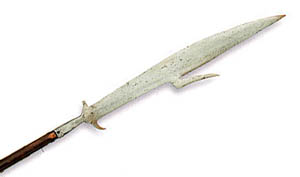
GlaivesA glaive is a polearm consisting of a single-edged tapering blade similar in shape to a modern kitchen knife on the end of a pole. The blade is fixed in a socket-shaft configuration similar to an axe head, both the blade and shaft varying in length. Illustrations in the 13th century Maciejowski Bible show a short staffed weapon with a long blade used by both infantry and cavalry. Typically however, the blade was around 18 inches (55 cm) long, on the end of a pole 6 or 7 feet (180–210 cm) long. Occasionally glaive blades were created with a small hook or spike on the reverse side. The modern term for these is glaive-guisarmes. |
 |
|||||||||||||||||||||||||||||||||||||||||||||||||||||||||||||||||||||||||||||||||||||||||||||||||||||||||
GuisarmesA guisarme (gisarme, giserne or bisarme) was a pole weapon used in Europe between 1000–1400. It was used primarily to dismount knights and horsemen. Like most polearms it was developed by peasants by combining hand tools with long poles, in this case by putting a pruning hook onto a spear shaft. While hooks are effective for dismounting horsemen from mounts, they lack the stopping power of a spear especially when dealing with static opponents. Early designs were simply a hook on the end of a long pole. Later designs implemented a small reverse spike on the back of the blade. Eventually weapon makers incorporated the usefulness of the hook in a variety of different polearms and guisarme became a catch-all for any weapon that included a hook on the blade. |
|
|||||||||||||||||||||||||||||||||||||||||||||||||||||||||||||||||||||||||||||||||||||||||||||||||||||||||
HalberdsA halberd (or Swiss voulge) is a two-handed pole weapon that came to prominent use during the 14th and 15th centuries but has continued in use as a ceremonial weapon to the present day. First recorded as "hellembart" in 1279, the word halberd possibly comes from the German words Halm (staff) or Helm (helmet), and Barte (axe). The halberd consists of an axe blade topped with a spike mounted on a long shaft. It always has a hook or thorn on the back side of the axe blade for grappling mounted combatants. Early forms are very similar in many ways to certain forms of voulge, while 16th century and later forms are similar to the poleaxe. The Swiss were famous users of the halberd in the medieval and renaissance eras, with various cantons evolving regional variations of the basic form. The word halberd is also used to translate the Chinese ji and also a range of medieval Scandinavian weapons as described in sagas, such as the atgeir. |
|
|||||||||||||||||||||||||||||||||||||||||||||||||||||||||||||||||||||||||||||||||||||||||||||||||||||||||
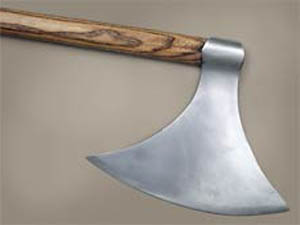
Danish AxesThe Danish Axe (also Broad Axe, Dane-axe) is a weapon with a heavy crescent-shaped head mounted on a haft 4ft. to 6ft. (1.2-1.8 m.) in length. Originally a Viking weapon, it was adopted by the Anglo-Saxons and Normans in the 11th century, spreading through Europe in the 12th and 13th centuries.]. Variants of this basic weapon continued in use in Scotland and Ireland into the 16th century. |
 |
|||||||||||||||||||||||||||||||||||||||||||||||||||||||||||||||||||||||||||||||||||||||||||||||||||||||||
SparthsIn the 13th century, variants on the Danish axe are seen. Described in English as a sparth (from the Old Norse sparðr) or pale-axe], the weapon featured a larger head with broader blade, the rearward part of the crescent sweeping up to contact (or even be attached to) the haft. Another development extended the forward part of the crescent. In Ireland, this axe was known as a Sparr. Originating in either Western Scotland or Ireland, the sparr was widely used by the galloglass. Although sometimes said to derive from the Irish for a joist or beam, a more likely definition is as a variant of sparth. Although attempts have been made to suggest that the sparr had a distinctive shaped head, illustrations and surviving weapons show there was considerable variation and the distinctive feature of the weapon was its long haft. |
 |
|||||||||||||||||||||||||||||||||||||||||||||||||||||||||||||||||||||||||||||||||||||||||||||||||||||||||
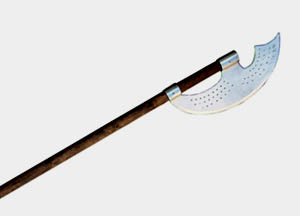
BardichesA bardiche (berdiche, or long poleaxe), is a type of polearm known in medieval and renaissance Europe, especially in Eastern Europe and Russia where it was used instead of halberd. Occasionally the weapons of such form were made in Antiquity and Early Middle Ages, but the regular and massive usage of bardiches started in the late 14th century. It was probably developed from the Scandinavian broad axe, but in Scandinavia it appeared only in the late 15th century. In the 16th century bardiche became a weapon associated with streltsy, Russian guardsmen armed with firearms. |
 |
|||||||||||||||||||||||||||||||||||||||||||||||||||||||||||||||||||||||||||||||||||||||||||||||||||||||||
PollaxesIn the 14th century, the basic long axe began to evolve, gaining an armour piercing spike on the back and another on the end of the haft for thrusting. This evolved into the pollaxe of the following century. The pollaxe evolved to break through plate armour and featured various combinations of an axe-blade, a back-spike and a hammer. It was the favoured weapon for men-at-arms fighting on foot into the sixteenth century[. |
|
|||||||||||||||||||||||||||||||||||||||||||||||||||||||||||||||||||||||||||||||||||||||||||||||||||||||||
MaulsThe maul is a long-handled hammer with a heavy metal head, either of lead or iron. It is similar in appearance and function to a modern sledgehammer but is sometimes shown as having a spear-like spike on the fore-end of the haft. The use of the maul as a weapon seems to date from the later 14th century. In 1382, rebellious citizens of Paris seized 3,000 mauls from the city armoury, Later in the same year, Froissart records French men-at-arms using mauls at the Battle of Roosebeke, demonstrating it was not only a weapon of the lower classes. A particular use of the maul was by archers in the 15th and 16th centuries. At Agincourt, English longbowmen are recorded as using lead mauls, initially as a tool to drive in stakes but later as an improvised weapon. Other references during the century suggest continued use. They are recorded as a weapon of Tudor archers as late as 1562. |
|
|||||||||||||||||||||||||||||||||||||||||||||||||||||||||||||||||||||||||||||||||||||||||||||||||||||||||
Becs de CorbinA bec de corbin is a type of pole weapon that was popular in medieval Europe. The name is Old French for "crow's beak". Similar to the Lucerne hammer, it consists of a modified hammer's head and spike mounted atop a long pole. Unlike the Lucerne hammer, the bec de corbin was used primarily with the 'beak' or fluke to attack instead of the hammer head. The hammer face balancing the beak was often blunt instead of the multi-pronged Lucerne, and the beak tended to be stouter; better designed for tearing armour. Also, the spike mounted on the top of head was not nearly as long and thin as in the Lucerne. Bec de corbin occasionally becomes a catchall for any type of warhammer, such as a maul or a horseman's pick. A similar name bec de faucon (meaning 'falcon's beak') refers to a related weapon called a poleaxe or, more specifically, to the hook on its reverse side. |
|
|||||||||||||||||||||||||||||||||||||||||||||||||||||||||||||||||||||||||||||||||||||||||||||||||||||||||
|
|
||||||||||||||||||||||||||||||||||||||||||||||||||||||||||||||||||||||||||||||||||||||||||||||||||||||||||
Ranged Weapons.
A ranged weapon is any a projectile or weapon that launches a projectile. In contrast, a weapon intended to be used in man-to-man combat is called a melee weapon. Early ranged weapons include weapons such as javelins, throwing axes the bow and arrow, and medieval siege engines like catapults, ballistas and trebuchets. Ranged weapons were effective in combat in comparison to melee weapons, as they gave the wielder opportunity to launch multiple projectiles before an enemy armed with melee weapons or shorter ranged missile weapon posed a threat to him. Siege engines were also used for passing or hitting obstacles like fortifications. After the invention of gunpowder and the development of firearms, ranged weapons became the weapon of choice. Maximum effective range of a weapon is the greatest distance fired and able to produce casualties or damage consistently. |
|
|||||||||||||||||||||||||||||||||||||||||||||||||||||||||||||||||||||||||||||||||||||||||||||||||||||||||
Throwing axes - FranciscasThe francisca (or francesca) is a throwing axe used as a weapon during the Early Middle Ages by the Franks. It was a characteristic Frankish national weapon at the time of the Merovingians from about 500 to 750 AD and is known to have been used during the reign of Charlemagne (768 - 814). Although associated with the Franks, it was also used by other Germanic peoples of the period including the Anglo-Saxons. Examples have been found in England. The term francisca first appeared in the book Ethymologiarum sive originum, libri XVIII by Isidore of Seville (c. 560 - 636) as a name used among the Spanish to refer to these weapons "because of their use by the Franks". The francisca is characterised by its distinctly arch-shaped head, widening toward the cutting edge and terminating in a prominent point at both the upper and lower corners. The top of the head is usually either S-shaped or convex with the lower portion curving inward and forming an elbow with the short wooden haft. The upswept point and downturned edge were both capable of penetrating chain mail. Sometimes the head is more upswept forming a wider angle with the haft. Most franciscas have a round or teardrop-shaped eye designed to fit the tapered haft, similar to Viking axes. Based on surviving heads of franciscas recovered at Burgh Castle and Morning Thorpe in county Norfolk, England the length of the head itself measured 14-15 cm (5-6 in) from the edge to the back of the socket. The Roman historian Procopius (c. 500 - 565) described the Franks and their use of throwing axes:
The weight of the head and length of the haft would allow the axe to be thrown with considerable momentum to an effective range of about 12 m (40 ft). Even if the edge of the blade were not to strike the target the weight of the iron head could cause injury. Another feature of the francisca was its tendency to bounce unpredictably upon hitting the ground due to its weight, shape, lack of balance and curvature of the haft, making it difficult for defenders to block. It could rebound up at the legs of opponents or against shields and through the ranks. The Franks capitalised on this by throwing the franciscas in a volley in order to confuse, intimidate and disorganise enemy lines either before or during a charge to initiate close combat. The régime of Vichy France used the image of a stylised double-headed francisque as part of its iconography (compare fasces). Today, the francisca remains in popular use as a throwing axe in competitions and as a weapon for re-enactors of medieval warfare. |
|
|||||||||||||||||||||||||||||||||||||||||||||||||||||||||||||||||||||||||||||||||||||||||||||||||||||||||
|
|
||||||||||||||||||||||||||||||||||||||||||||||||||||||||||||||||||||||||||||||||||||||||||||||||||||||||||
JavelinsThe javelin is a light spear designed primarily for casting as a ranged weapon. The javelin is almost always thrown by hand (unlike the arrow and slingshot which are projectiles shot from a mechanism). it was used throughout medieval Europe. There is some literary and archaeological evidence that the Norse were familiar with and used the javelin for hunting and warfare, but they commonly used a spear designed for both throwing and thrusting. Viking grave excavations have revealed spears and spearheads among the funerary offerings. They were one of the most common weapons found.. These spears included throwing javelins, as well as pikes for thrusting. The employment of javelins in battle by the Vikings was documented in the Anglo-Saxon poem about the 991 AD Battle of Maldon. The Anglo-Saxon term for javelin was france. In Anglo-Saxon warfare soldiers usually formed a shield wall and used heavy weapons like Danish axes, swords and spears. Javelins, including barbed angons, were used as an offensive weapon from behind the shield wall or by warriors who left the protective formation and attacked the enemy as skirmishers. The Almogavars were a class of Aragonese infantrymen armed with a short sword, a shield and two heavy javelins, known as assegai. The equipment resembled that of a Roman legionary and the use of the heavy javelins was much the same. Jinetes were Spanish light horsemen armed with a javelin, sword and a shield. This troop type developed in the Middle Ages in response to the massed light cavalry of the Moors. Often fielded in significant numbers by the Spanish, and at times the most numerous of the Spanish mounted troops, they were proficient at skirmishing and rapid manoeuvre, and played an important role in Spanish mounted warfare throughout the Reconquista and up until the sixteenth century. The Welsh, particularly the North Welsh, used the javelin as one of their main weapons. During Norman and later English invasions, the primary Welsh tactic was to rain javelins on the enemy troops and then retreat into the mountains or woods before they could pursue and attack them. |
|
|||||||||||||||||||||||||||||||||||||||||||||||||||||||||||||||||||||||||||||||||||||||||||||||||||||||||
Bows, LongbowsA bow is a weapon that projects arrows powered by its elasticity .It is a form of spring. As the bow is drawn, energy is stored as potential energy in the limbs of the bow and transformed into kinetic energy as the string is released, the string transferring this energy to the arrow A longbow is a type of bow that is tall (roughly equal to the height of the person who uses it). This allows its user a fairly long draw, at least to the jaw. The average length of arrowshafts recovered from the 1545 sinking of the Mary Rose is 75 cm or 30 in). A longbow is not significantly recurved. Its limbs are relatively narrow so that they are circular or D-shaped in cross section. Flatbows can be just as long; the difference is that, in cross-section, a flatbow has limbs that are approximately rectangular. Traditional longbows are made from a single natural piece of wood. They have been used for thousands of years, for hunting and warfare. . Worldwide the average power for bows of all designs is about 220 newtons (50 pounds) at 70 cm (28 inches) of draw which is suitable for most hunting applications. Bows for warfare tend to be more powerful, with the most powerful bows being the English longbow which topped the 900 N (200-pound) at 80 cm (32 inches) mark. Many men in later medieval England were capable of shooting bows from 670–900 N (150–200 pounds) — skeletons of archers reveal spur like projections on the bones where their over-developed muscles pulled. These men trained daily from an early age and they had the incentive of knowing that their lives would depend on being able to use such powerful bows. There are modern day examples of men who train similarly and are able to draw such powerful bows. In the Middle Ages the Welsh and the English were famous for their very powerful English longbows, used to great effect in the civil wars of the period and against the French in the Hundred Years' War, with notable success at the battles of Crécy (1346), Poitiers (1356) and Agincourt (1415).
A typical military longbow archer would be provided with between 60 and 72 arrows at the time of battle. Most archers would not loose arrows at maximum rate, as it would exhaust even the most experienced man. A modern warbow archer does not like to try for more than six a minute. Not only are the arms and shoulder muscles tired from the exertion, but the fingers holding the bowstring become strained; Ranged volleys at the beginning of the battle would differ markedly from the closer, aimed shots as the battle progressed and the enemy neared. Arrows were not unlimited, so archers and their commanders took every effort to ration their use.
Resupply during battle was necessary. Boys were often employed to run additional arrows to longbow archers while in their positions on the battlefield. As one commentator has put it "The longbow was the machine gun of the Middle Ages: accurate, deadly, possessed of a long range and rapid rate of fire, the flight of its missiles was likened to a storm." This rate of fire was much higher than that of its nearest rival on the battlefield, the crossbow. It was also much higher than the standard early firearms right up the nineteenth century although the lower training requirements and greater penetration of firearms eventually led to the longbow falling into disuse. Because the longbow can be made from a single piece of wood, it can be crafted relatively easily and quickly. Amateur bowyers today can craft a longbow in about ten to twenty hours, while highly skilled bowyers can craft wooden longbows in a few hours.
One of the simpler longbow designs is known as the self bow. By definition, a self bow is made from a single piece of wood. Truly traditional English longbows are self bows, made from yew wood. The bowstave is cut from the radius of the tree so that the sapwood (on the outside of the tree) becomes the back two thirds and the belly, the remaining one third, is heartwood. Yew sapwood is good only in tension, while the heartwood is good in compression. However, one must make compromises when making a yew longbow, as it is difficult to find perfect unblemished yew. The demand for yew bowstaves was such that by the late 1500s, mature yew trees were almost extinct in northern Europe. In other desirable woods such as Osage orange and mulberry the sapwood is almost useless and is normally removed entirely. Longbows, because of their narrow limbs and rounded cross-section (which does not spread out stress within the wood as evenly as a flatbow’s rectangular cross section), need to be either less powerful, longer or of more elastic wood than an equivalent flatbow. In Europe the last approach was used, with yew being the wood of choice, because of its high compressive strength, light weight and elasticity.
|
|
|||||||||||||||||||||||||||||||||||||||||||||||||||||||||||||||||||||||||||||||||||||||||||||||||||||||||
|
|
||||||||||||||||||||||||||||||||||||||||||||||||||||||||||||||||||||||||||||||||||||||||||||||||||||||||||
CrossbowsA crossbow is a range weapon that shoots projectiles (called bolts or quarrels) consisting of a bow mounted on a stock. The medieval crossbow was called by many names, most of which derived from the word ballista, a Roman torsion engine resembling a crossbow in appearance. Historically, crossbows played a significant role in the warfare of Europe, and the Mediterranean. A crossbow is a bow mounted on a stock (or tiller) with a mechanism that holds the drawn bow string. Early designs featured a slot in the stock, into which the cocked string was placed. To fire this design, a vertical rod is thrust up through a hole in the bottom of the notch, forcing the string out. This rod is usually attached perpendicular to a rear-facing firing lever called a trigger or 'tickler'. A later design implemented a rolling cylindrical pawl called a 'nut' to retain the cocked string. This nut has a perpendicular centre slot for the bolt, and an intersecting axial slot for the string, along with a lower face or slot against which the internal trigger sits. They often also have some form of strengthening internal 'sear' or trigger face, usually of metal. These 'roller nuts' were either free-floating in their close-fitting hole across the stock, tied in with a binding of sinew or other strong cording, or mounted on a metal axle or pins. Removable or integral plates of wood, ivory or metal on the sides of the stock kept the nut in place laterally. Nuts were made of antler, bone, ivory or metal, usually brass. A trigger system, (usually made of iron or steel from medieval times onwards), was used to retain the force of the cocked string in the nut and then release the nut to spin and the string to shoot the bolt. Complicated iron triggers that could be released with little strength are known in Europe from the early 1400s. As a result crossbows could be kept cocked and ready to shoot for some time with little effort, allowing crossbowmen to aim better. The bow (called the "prod" or "lath") of early crossbows was made of a single piece of wood, usually ash or yew. Composite bows are made from layers of different material—often wood, horn and sinew—glued together and bound with animal tendon. These composite bows, made of several layers, are much stronger and more efficient in releasing energy than simple wooden bows. As steel became more widely available in Europe around the 14th century, steel prods came into use The crossbow prod is very short compared to ordinary bows, resulting in a short draw length. This leads to a higher draw weight in order to store the same amount of energy. \Thick prods are less efficient at releasing energy, but more energy can be stored. Traditionally the prod was often lashed to the stock with rope, whipcord, or other strong cording. This cording is called the bridle. The strings for a crossbow are typically made of strong fibres that would not fray. Whipcord was very common. Linen, hemp, and sinew were used as well. In wet conditions, twisted mulberry root was occasionally used. Very light crossbows can be drawn by hand, but heavier types need the help of mechanical devices. The simplest version of mechanical cocking device is a hook attached to a belt, drawing the bow by straightening the legs. Other devices are hinged levers which either pulled or pushed the string into place, cranked rack-and-pinion devices called 'cranequins' and multiple cord-and-pulley cranked devices called windlasses. The Saracens called the crossbow qaws Ferengi, or "Frankish bow," as the Crusaders used the crossbow against the Arab and Turkoman horsemen with remarkable success. The adapted crossbow was used by the Islamic armies in defence of their castles. Later footstrapped version become very popular among the Muslim armies in Iberia. During the Crusades, Europeans were exposed to Saracen composite bows, made from layers of different material—often wood, horn and sinew—glued together and bound with animal tendon. These composite bows could be much more powerful than wooden bows, and were adopted for crossbow prods across Europe. The repeating crossbow automated the separate actions of stringing the bow, placing the projectile and shooting. This way the task can be accomplished with a simple one-handed movement, while keeping the weapon stationary. As a result, it is possible to shoot at a faster rate compared to unmodified version The arrow-like projectiles of a crossbow are called bolts. These are much shorter than arrows, but can be several times heavier. There is an optimum weight for bolts to achieve maximum kinetic energy, which varies depending on the strength and characteristics of the crossbow, but most could pass through common chain mail. Bolts typically have three fletches, commonly seen on arrows. Crossbow bolts can be fitted with a variety of heads, some with sickle-shaped heads to cut rope or rigging; but the most common today is a four-sided point called a quarrel. A highly specialise type of bolt may be employed today to collect blubber biopsy samples from marine mammals to be used in biology research. Crossbows can also be adapted to shoot lead bullets or stones, in which case they are called stone-bows. Primarily used for hunting wildfowl, these usually have a double string with a pouch between the strings to hold the projectile. A bullet crossbow is a type of handheld crossbow which rather than arrows or bolts shoots spherical projectiles made of stone, clay or lead. There are two variants, one has a double string with a pocket for the projectile; the other has a barrel with a slot for the string. The use of crossbows in European warfare dates back to Roman times and is evident from the Battle of Hastings until about 1500 AD. They almost completely superseded hand bows in many European armies in the twelfth century for a number of reasons. Although a longbow achieves comparable accuracy and faster shooting rate than an average crossbow, crossbows release more kinetic energy and can be used effectively after a week of training, while a comparable single-shot skill with a longbow takes years of practice. In the armies of Europe, mounted and unmounted crossbowmen, often mixed with javeliners and archers, occupied a central position in battle formations. Usually they engaged the enemy in offensive skirmishes before an assault of mounted knights. Crossbowmen were also valuable in counterattacks to protect their infantry. The rank of commanding officer of the crossbowmen corps was one of the highest positions in any army of this time. Along with polearm weapons made from farming equipment, the crossbow was also a weapon of choice for insurgent peasants . Mounted knights armed with lances proved ineffective against formations of pikemen combined with crossbowmen whose weapons could penetrate most knights' armour. The invention of pushlever and ratchet drawing mechanisms enabled the use of crossbows on horseback, leading to the development of new cavalry tactics. Knights and mercenaries deployed in triangular formations, with the most heavily armoured knights at the front. Some of these riders would carry small, powerful all-metal crossbows of their own. The smallest crossbows are pistol crossbows. Others are simple long stocks with the crossbow mounted on them. These could be shot from under the arm. The next step in development was rifle shaped stocks that allowed better aiming. Crossbows were eventually replaced in warfare by more powerful gunpowder weapons, although early guns had slower rates of fire and much worse accuracy than contemporary crossbows. Later, similar competing tactics would feature harquebusiers or musketeers in formation with pikemen, pitted against cavalry firing pistols or carbines. With a crossbow, archers could release a draw force far in excess of what they could have handled with a bow. Moreover, crossbows could be kept cocked and ready to shoot for some time with little effort, allowing crossbowmen to aim better. The disadvantage is the greater weight and clumsiness compared to a bow, as well as the slower rate of fire and the lower efficiency of the acceleration system, but there would be reduced elastic hysteresis, making the crossbow a more accurate weapon. Crossbows have a much smaller draw length than bows. This means that for the same energy to be imparted to the arrow (or bolt) the crossbow has to have a much higher draw weight. Cannon. 29 of the Second Lateran Council called by Pope Innocent II in 1139 banned the use of crossbows against Christians.
|
|
|||||||||||||||||||||||||||||||||||||||||||||||||||||||||||||||||||||||||||||||||||||||||||||||||||||||||
ArbalestsThe arbalest (also arblast) was a late variation of the medieval European crossbow. A larger weapon, the arbalest had a steel prod ("bow"). Since an arbalest was much larger than earlier crossbows, and because of the greater tensile strength of steel, it had a greater force. The strongest windlass-pulled arbalests could have up to 22 kN (5000 lbf) strength and be accurate up to 900 m. A skilled arbalestier (arblaster) could shoot two bolts per minute. Arbalests were sometimes considered inhumane or unfair weapons, since an inexperienced arbalestier could use one to kill a knight who had a lifetime of training. The arbalest required special systems for pulling the sinew via windlasses. For siege warfare the size of crossbows was increased to hurl large projectiles such as rocks at fortifications. Such crossbows needed a massive base frame and powerful windlass devices. Such devices include the oxybeles. The ballista has torsion springs replacing the elastic prod of the oxybeles, but later also developed into smaller versions. "Ballista" is still the root word for crossbow in Romance languages such as Italian (balestra). The term arbalest is sometimes used interchangeably with crossbow. 'Arbalest' is Medieval French corruption from the Roman name arcuballista for crossbow; Modern French uses the word arbalète.. The word applies for both crossbow and arbalest |
|
|||||||||||||||||||||||||||||||||||||||||||||||||||||||||||||||||||||||||||||||||||||||||||||||||||||||||
|
||||||||||||||||||||||||||||||||||||||||||||||||||||||||||||||||||||||||||||||||||||||||||||||||||||||||||
Guns |
|
|||||||||||||||||||||||||||||||||||||||||||||||||||||||||||||||||||||||||||||||||||||||||||||||||||||||||
Hand CannonsA hand cannon (also called a gonne=gun) is an early form of firearm. It is possibly the oldest type of portable firearm, as well as the simplest type of early firearm, as most examples require direct manual external ignition through a touch hole without any form of firing mechanism. It may also be considered a forerunner of the handgun. The hand cannon was widely used until at least the 1520s in Europe and Asia, where it was mostly supplanted by matchlock firearms. As with the origins of gunpowder, there controversy as to where and when the hand cannon came into existence. The earliest surviving documentary evidence for the use of hand cannons are from several Arabic manuscripts dated to the 14th century. It now generally accepted that firearms originated in China. Although there is no solid evidence for firearms in Europe before the 1300s, archaeologists have discovered a gun in Manchuria dating from the 1200s, and a historian has identified a sculpture in Sichuan dating from the 1100s that appears to represent a figure with a firearm. Since all the other evidence points to Chinese origins, it is safe to conclude that this was in fact the case. Europeans certainly had firearms by the first half of the 1300s. The Arabs obtained firearms in the 1300s too, and the Turks, Iranians, and Indians all got them no later than the 1400s, in each case directly or indirectly from the Europeans. The hand cannon was a simple weapon, effectively consisting of a barrel with some sort of handle, though it came in many different shapes and sizes. Although surviving examples are all completely constructed of metal, evidence suggests that many were attached to some kind of stock, usually wooden. Other examples show a simple metal extension from the barrel acting as the handle. In fact, not all hand cannons used metal at all in their construction, as some Chinese illustrations demonstrate bamboo tubes being used instead. For firing, the hand cannon could be held in two hands while an assistant applied the means of ignition. These could range from smouldering wood or coal, red-hot iron rods, to slow-burning matches. Alternately, the hand cannon could be placed on a rest and held by one hand while the gunner applied the means of ignition himself. Projectiles used in these weapons were varied, with many utilizing a variety of different ammunition. Some fired pebbles found on the ground, while others fired more sophisticated ammunition such as shaped balls of stone or iron or arrows. Later hand cannons were made with a flash pan attached to the barrel, and a touch hole drilled through the side wall of the gun instead of the top of the barrel. The flash pan had a leather cover, and later on a hinged metal lid fitted, to keep the priming powder dry until the moment of firing and to prevent premature firing. These features were carried on over to subsequent firearms. Due to the poor quality of powder that was often used in these weapons and their crude construction, they were not effective missile weapons, as early examples often lacked sufficient power to punch through light armour. All were inaccurate, due to the awkward handling as well as the aforementioned poor quality of the weapons. While the noise and flash may have had some psychological effect on the enemy, many early hand cannons were used in a minor capacity and so lacked battlefield presence. The invention of corned powder, the slow match, and the serpentine around the mid-1400s led to much more effective firearms and eventually to increased adoption. It also prompted the development of the first matchlock firearms, which could be more effectively aimed and fired than hand cannon. Gradually, hand cannon became obsolete, although it found use in some locales up until the 20th century. Firearms, of which the hand cannon was an early example, gradually came to dominate European warfare, and the reasons are clear. The hand cannon was inexpensive and easy to mass produce. At the same time, the forging methods required meant that centralised governments had a measure of control over their manufacture (and especially the manufacture of ammunition—an important consideration in a medieval Europe wracked by rebellion). They had superior armour-penetration capability; the longbow was somewhat effective against mail armour, and the crossbow slightly better, but the hand cannon could pierce even plate armour. Furthermore, much like the crossbow, the weapon could be employed by relatively poorly-trained troops. The other hand-operated ranged weapons of the time had their own drawbacks. Crossbows had superior accuracy and similar power as compared to early hand cannons. However, they were expensive to make, slow to reload and their performance was almost as severely affected by wet weather as that of hand cannons. While the hand cannon could not match the accuracy nor speed of fire of the longbow, gunners did not require the special training and continuous practice from childhood required of a good bowman. Despite the hand cannon's serious drawbacks, especially early in its development, its virtues outshone those of either the longbow or the crossbow, and it grew and evolved to become the ubiquitous firearm of later European wars. |
|
|||||||||||||||||||||||||||||||||||||||||||||||||||||||||||||||||||||||||||||||||||||||||||||||||||||||||
ArquebusesThe harquebus (or harks or backbit), or "hook tube", is an early muzzle-loaded firearm used in the 15th to 17th centuries. The word was originally modelled on the German: Hakenbüchse, this produced haquebute. It then copied the Italian word: archibugio; which gave arquebuse (French), arcabuz (Spanish and Portuguese) and arquebus (English). In distinction from its predecessor the hand cannon, it has a matchlock. Like its successor the musket, it is a smoothbore firearm, but it is lighter and easier to carry. It is a forerunner of the rifle and other longarm firearms. An improved version of the arquebus, the caliver, was introduced in the early 1500s. The word is derived from the English corruption of calibre as this gun was of standard bore, increasing combat effectiveness as troops could load bullets that would fit their guns (before, they would have to modify shot to fit, force it in or cast their own before the battle). Heavy arquebuses mounted on wagons were called arquebus à croc. These carried a ball of about 3.5 ounces. In the early 16th century, the term "arquebus" had a confusing variety of meanings. Some writers used it to denote any matchlock shoulder gun, referring to light versions as caliver and heavier pieces fired from a fork rest as musket. Others treated the arquebus and caliver synonymously, both referring to the lighter, forkless shoulder-fired matchlock. As the 16th century progressed, the term arquebus came to be clearly reserved for the lighter forkless weapon. When the wheel lock was introduced, wheel-lock shoulder arms came to be called arquebuses, while lighter, forkless matchlock and flintlock shoulder weapons continued to be called calivers. In the mid-17th century, the light flintlock versions came to be called fusils or fuzees. As low-velocity firearms, arquebuses was used against enemies who were often partially or fully protected by steel-plate armour. Plate armour was standard in European combat from about 1400 until the middle of the 17th century. Good suits of plate would usually stop an arquebus ball at long range. It was a common practice to "proof" (test) armour by firing a pistol or arquebus at a new breastplate. The small dent would be circled by engraving, to call attention to it. However, at close range, it was possible to pierce even the armour of knights and other heavy cavalry, depending highly on the power of the arquebus and the quality of the armour. This led to changes in armour usage, such as the three-quarter plate, and finally the retirement of plate armour from most types of infantry. The arquebus was fired by a matchlock mechanism. It had a larger bore than its predecessors. From the middle of the 16th century, newer wheellock mechanisms were used instead of older matchlocks. The flared muzzle of some examples made it easier to load the weapon. The name 'hook gun' is often claimed to be based on the bent shape of the arquebus' butt. It might also be that some of the original arquebuses had a metal hook near the muzzle that may have been used for bracing against a solid object to absorb recoil. Since all the arquebuses were handmade by various gunsmiths, there is no typical specimen. The trigger mechanism of an early arquebus most often resembled that of a crossbow: a gently curved lever pointing backward and parallel to the stock (see illustration of Spanish arquebusier below). Squeezing the lever against the stock depressed a sear which was in turn linked to the base of the serpentine that held the match. The serpentine then brought the match into the flash pan to ignite the priming, firing the weapon. By the later 16th century, gunsmiths in most countries had begun to introduce the short trigger perpendicular to the stock that is familiar to modern shooters. However, the majority of French matchlock arquebuses retained the crossbow-style trigger throughout the 17th century. The first European usage of the arquebus in large numbers was in Hungary under king Matthias Corvinus (r. 1458-1490). Every third soldier in the Black Army of Hungary had an arquebus. Arquebusiers were effective against cavalry and other infantry, particularly when placed with pikemen in the pike and shot formation, which revolutionised the Spanish military. This formation was used and succeeded at the Battle of Cerignola (1503), which was one of the first battles to utilise this formation, and the first to be won through the use of gunpowder-based small arms. Arquebuses were used in the Italian Wars of the first half of the 1500s. Portuguese and Spanish conquerors also made use of the weapon. Arquebuses were carried by some of the soldiers of Hernán Cortés in his conquest of Mexico in the 1520s. Arquebuses played an important role in the victories of Cristóvão da Gama's small and outnumbered army in his 1541-42 campaign in Ethiopia. Arquebuses were also used in the Moroccan victory over the Songhai Empire at the Battle of Tondibi in 1590. The arquebus was unable to match the accuracy of a bow in the hands of a highly-skilled archer. The arquebus did, however, have a faster rate of fire than the most powerful crossbow, a shorter learning curve than a longbow, and was more powerful than either. An arquebusier could carry more ammunition and powder than a crossbowman or longbowman could with bolts or arrows. Once the methods were developed, powder and shot were relatively easy to mass-produce, while arrow making was a craft requiring highly skilled labour. The weapon also had the advantage of frightening enemies (and horses) with the noise. Wind can reduce the accuracy of archery, but has less of an effect on an arquebusier. Producing an effective arquebusier required much less training than producing an effective bowman. During a siege it was also easier to fire an arquebus out of loopholes than it was a bow and arrow. It was also possible to load an arquebus (and indeed any smoothbore gun) with small shot rather than a single ball. Small shot did not pack the same punch as a single round ball but the shot could hit and wound multiple enemies. The arquebus was more sensitive to humid weather. At the Battle of Villalar, rebel troops lost the battle badly partially due to having a high proportion of arquebusiers combined with the battle taking place in a rainstorm which rendered the weapons almost useless. Gunpowder also ages much faster than a bolt or an arrow, particularly if improperly stored. Also, the resources needed to make gunpowder were less universally available than the resources needed to make bolts and arrows. A bullet must fit a barrel much more precisely than an arrow or bolt must fit a bow, so the arquebus required more standardisation and made it harder to resupply by looting bodies of fallen soldiers. Gunpowder production was also far more dangerous than arrow production.
The amount of smoke produced by black powder weapons was considerable, making it hard to see the enemy after a few salvos, unless there was enough wind to disperse the smoke quickly. Conversely, this cloud of smoke also served to make it difficult for any archers to target soldiers with handguns. Prior to the wheellock, the need for a lit match made stealth and concealment nearly impossible, particularly at night. Even with successful concealment, smoke emitted by a single arquebus shot would make it obvious where a shot came from - at least in daylight. While with a crossbow or bow a soldier could conceivably kill silently, this was of course impossible with an explosion-driven projectile weapon like the arquebus. The noise of arquebuses and the ringing in the ears that it caused could also make it hard to hear shouted commands. In the long run, the weapon could make the user permanently hard of hearing. Bows and crossbows could shoot over obstacles by firing with high-arcing ballistic trajectories in order to reach the enemy when the person or object had some frontal but no overhead cover (such as when troops are in melee with the enemy) — albeit with much less accuracy. |
|
|||||||||||||||||||||||||||||||||||||||||||||||||||||||||||||||||||||||||||||||||||||||||||||||||||||||||
|
||||||||||||||||||||||||||||||||||||||||||||||||||||||||||||||||||||||||||||||||||||||||||||||||||||||||||
Artillery - Stone Throwing Engines
The Word Pierrier denotes a stone throwing device and is used as a general term to cover a number of different types of war engine. Pierriers were employed either to smash masonry walls or to throw projectiles over them. All pierriers were made from wood. With the introduction of gunpowder, the pierrier ceded its place as the siege engine of choice to the cannon. Specific types of pierrier are:
|
|
|||||||||||||||||||||||||||||||||||||||||||||||||||||||||||||||||||||||||||||||||||||||||||||||||||||||||
Traction TrebuchetsThe trebuchet derives from the ancient sling. A variation of the sling contained a short piece of wood to extend the arm and provide greater leverage. This was evolved into the traction trebuchet by the Chinese, in which a number of people pull on ropes attached to the short arm of a lever that has a sling on the long arm. This type of trebuchet is smaller and has a shorter range but is a more portable machine and has a faster rate of fire than a larger counterweight powered one. The smallest traction trebuchets could be powered by the weight and pulling strength of one person using a single rope; but most were designed and sized to need from 15 to 45 men, generally two per rope. These teams would sometimes be local citizens assisting in the siege or in the defence of their town. Traction trebuchets had a range of from 2000 to well over 3000 feet when casting weights up to 750 pounds (60 kg). A traction trebuchet functions in the same way as a counterweight trebuchet, except that instead of a hoisted weight, the hurling arm is powered by a crew of men, pulling on ropes attached to the short lever arm. A counterweight trebuchet is powered by a very heavy counterweight, acting on a lever arm. The fulcrum of the lever (usually an axle) is supported by a high frame, and the counterweight is suspended from the short arm of the lever. The sling is attached to the end of the long arm of the lever. One end of the sling is captive, while the other end is hooked
to the long arm in such a way as to release when the arm and sling
reach the optimal hurling angles. The trebuchet is energised by
lowering the long arm and raising the weighted short arm, usually
with a winch, and is locked into the charged state by a trigger
mechanism (cocked). With the long arm lowered near ground level,
the sling is loaded with the projectile, and laid out on the ground,
with the captive and hooked ends away from the target, and the load
and pouch laid on the ground toward the target, under the trebuchet.
When the trigger is released, the weighted short arm is driven by
gravity into an accelerating pendulum motion, causing the lighter,
long arm of the lever to revolve around the fulcrum at the opposite
arc, which in turn, pulls the sling and its contents into a whipping
motion at the end of the long arm. As the arm continues to swing
past the vertical position, the counterweight rises, causing the
lever motion to begin to slow down, while the sling continues to
whip forward around the end of the long arm. When the sling reaches
its launch angle, one end slips from its hook, releasing the projectile
toward the target. It is believed that the first traction trebuchets were used in China as early as in the 5th century BC, descriptions of which can be found in the 5th century BC. The traction trebuchet next appears in Byzantium. The Strategikon of Emperor Maurice, composed in 539, calls for "ballistae revolving in both directions," , probably traction trebuchets. The Miracles of St. Demetrius, composed by John I, archbishop of Thessalonike, describe traction trebuchets in the Avaro-Slav artillery: "Hanging from the back sides of these pieces of timber were slings and from the front strong ropes, by which, pulling down and releasing the sling, they propel the stones up high and with a loud noise." |
|
|||||||||||||||||||||||||||||||||||||||||||||||||||||||||||||||||||||||||||||||||||||||||||||||||||||||||
Counterweight Trebuchets
Our first clear written record of a counterweight trebuchet comes from an Islamic scholar, Mardi al-Tarsusi, who wrote in 1187, "Trebuchets are machines invented by unbelieving devils." (Al-Tarsusi, Bodleian MS 264).
The largest trebuchets needed exceptional quantities of timber:
at the siege of Damietta, in 1249, Louis IX of France was able to
build a stockade for the whole Crusade camp with the wood from 24
captured Egyptian trebuchets.
There are no really detailed descriptions of medieval or earlier trebuchets that give the dimensions or shape of the beam, the ratio of its long arm to its short arm, and so on. No specimens or models from medieval times survive. The few extant contemporary drawings of them are highly schematic and sometimes show physically impossible proportions. Methods used for optimising their performance and design were apparently closely held military secrets. Placing and aiming the trebuchet was also, no doubt, done by empirical trials. Small adjustments could be made by changing the angle of the hook holding the free end of the sling, a process which requires a heated forge on a full-scale engine. For larger, quicker adjustments, the length of the sling can be altered. Small adjustments from side-to-side can also be made by moving the channel in which the missile and sling slide in the base of the frame. The trebuchet itself could be moved as well, but with larger trebuchets, this would have been difficult; the largest trebuchets could weigh many tons.
Trebuchets were powerful weapons, with a range of up to about 300 yards/ 270 m. Castle designers often built their fortifications with trebuchets in mind; The range of many trebuchets was in fact shorter than that of a longbow in skilled hands, making it dangerous to be a trebuchet operator during a siege A trebuchet can increase its efficiency by allowing the counterweight to take the straightest possible downward path. This maximises the transfer of the counterweight's potential energy to the projectile rather than to stressing the frame. Mounting the counterweight on a pivot (below top) straightens the path of its fall, increasing its effectiveness. A fixed counterweight trebuchet in particular can therefore be made more efficient by the addition of wheels to allow the frame to move freely back and forth (below bottom). This also allowed the trebuchet to fire farther. The addition of wheels also makes the trebuchet more stable as part of the forward momentum of the falling counterweight is transferred to the forward motion of the trebuchet instead of a tilting action of the vertical frame, possibly tipping over of the machine or severely damaging the structure. The velocity of the trebuchet frame is added to that of the item being thrown, increasing its velocity and range by up to 33 percent. The wheeled trebuchet can effectively employ a fixed counterweight, mounted to the short end of the throwing arm, rather than the pendulum weight described above. The weights were usually stones and rubble, since lead was far too expensive and could be used for better purposes in a siege. That of dead, and often partially decomposed, carcasses of animals or people. These were used to intimidate the defending force, lower their morale, and often to spread disease amongst the besieged. This tactic often proved effective as the short supply of food, which was often of low quality or rotting, combined with the cramped living space of the defenders, poor hygiene, and infestations of vermin (which made convenient vectors for disease) made the ideal scenario for the spread of disease. Burning sand also could have been thrown at enemies. This has the effect of sand sticking in armour holes, which leads to a most painful burning or death. Despite its low accuracy, the versatility and manoeuvrability of the mangonel ensured that it was the most popular siege catapult used during the medieval period.
|
|
|||||||||||||||||||||||||||||||||||||||||||||||||||||||||||||||||||||||||||||||||||||||||||||||||||||||||
|
|
||||||||||||||||||||||||||||||||||||||||||||||||||||||||||||||||||||||||||||||||||||||||||||||||||||||||||
Onagers and MangonelsThe onager was a post-classical Roman siege engine. Its name comes from that of an onager (a wild jack ass), the similarity being its violent kicking action. The onager was a type of catapult that used torsional pressure, from twisted rope, to store energy for the shot. It consisted of a frame placed on the ground to whose front end a vertical frame of solid timber was rigidly fixed. Through the vertical frame ran an axle, which had a single stout spoke, on the extremity of which was a sling used to launch a projectile.
In the Middle Ages (recorded from around 1200) a less powerful
version of the onager was used that held the projectile in a fixed
bowl instead of a sling. This was so that many small projectiles
could be thrown rather than one large one. This engine was sometimes
called the mangonel, although the same name may have been used for
a variety of siege engines. A mangonel was a type of catapult or siege machine used in the medieval period to throw projectiles at a castle's walls. The mangonel did not have the accuracy or range of a trebuchet and threw projectiles on a lower trajectory than the trebuchet. The mangonel was a single-arm torsion catapult that held the projectile in a sling. A similar and perhaps older device was nicknamed the scorpion because of its resemblance to a scorpion's tail and sting. The word mangonel is derived from the Greek word 'magganon' which means "an engine of war", but was first used in medieval accounts of sieges. Mangonels shot heavy projectiles from a bowl-shaped bucket at the end of the arm. The bucket was used to launch more rocks than a sling could; this made it different from an onager. In combat, mangonels hurled rocks, burning objects (or vessels filled with flammable materials which created a fireball on impact; fire pots), or anything else readily available to the attacking and defending forces. One of the more unusual types of projectile was |
|
|||||||||||||||||||||||||||||||||||||||||||||||||||||||||||||||||||||||||||||||||||||||||||||||||||||||||
Ballistas and SpringaldsThe balista seems to have died out with much other technical know-how when the Roman Empire became Christian and learning was heavily discouraged (Everything a good Christian needed to know was in the Bible). The technology was rediscovered in the late middle ages when an exception was made for military engineering.
|
|
|||||||||||||||||||||||||||||||||||||||||||||||||||||||||||||||||||||||||||||||||||||||||||||||||||||||||
BombardsA bombard is a large calibre, muzzle-loading medieval cannon or mortar, for throwing heavy stone balls. The name bombarde was first noted and sketched in a French historical text around 1380. The modern terms bomb and bombardment derives from this. Bombards were usually used during sieges to hurl various forms of missile into enemy fortifications. Projectiles such as stone or metal balls, burning materials and weighted cloth soaked in quicklime or Greek fire are documented. The name derives from medieval Latin and French forms from a Greek word expressing the making of a humming noise. A notable example of a bombard is the large Mons Meg weapon, built around 1449 and used by King James II of Scotland. It was very powerful used for bringing down castle walls. Mons Meg was capable of firing 180 kg (396 lb) shots and was one of the largest bombards in its time. It is now housed on public display at Edinburgh Castle. Other known 15th century superguns include the wrought-iron Pumhart von Steyr and Dulle Griet as well as the cast-bronze Faule Mette, Faule Grete, and Grose Bochse. The Tsar Cannon is a late 16th century show-piece. The Dardanelles Gun, built in the Ottoman Empire in 1464 by Munir Ali, with a weight of 18.6 t and a length of 518 cm, was capable of firing stone balls of up to 63 cm diameter. Eventually bombards were superseded by weapons using smaller calibre iron projectiles with more powerful gunpowder. |
|
|||||||||||||||||||||||||||||||||||||||||||||||||||||||||||||||||||||||||||||||||||||||||||||||||||||||||
PetardsA petard was a small bomb used to blow up gates and walls when breaching fortifications. The term has a French origin and dates back to the sixteenth century. In a typical implementation, it was commonly either a conical or rectangular metal object containing 5 or 6 pounds of gunpowder, activated with a slow match used as a fuse.
The word remains in modern usage in the phrase hoist with one's own petard, which means "to be harmed by one's own plan to harm someone else" or "to fall into one's own trap", literally implying that one could be lifted up (hoist, or blown upward) by one's own bomb.
If a petard were to detonate prematurely due to a faulty or short slow match, the engineer would be lifted or "hoist" by the explosion. William Shakespeare used the now proverbial phrase "hoist with his own petard" in Hamlet. |
|
|||||||||||||||||||||||||||||||||||||||||||||||||||||||||||||||||||||||||||||||||||||||||||||||||||||||||
|
||||||||||||||||||||||||||||||||||||||||||||||||||||||||||||||||||||||||||||||||||||||||||||||||||||||||||
|
||||||||||||||||||||||||||||||||||||||||||||||||||||||||||||||||||||||||||||||||||||||||||||||||||||||||||
|
|
|
|
||||||||||||||||||||||||||||||||||||||||||||||||||||||||||||||||||||||||||||||||||||||||||||||||||||||||
|
||||||||||||||||||||||||||||||||||||||||||||||||||||||||||||||||||||||||||||||||||||||||||||||||||||||||||
|
|
|
|
||||||||||||||||||||||||||||||||||||||||||||||||||||||||||||||||||||||||||||||||||||||||||||||||||||||||

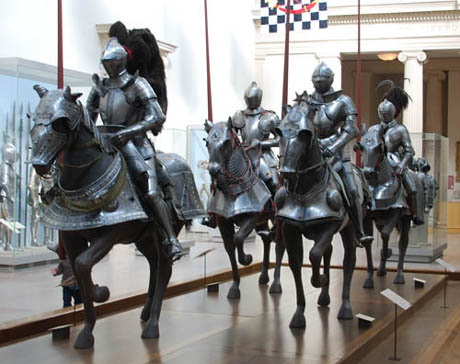
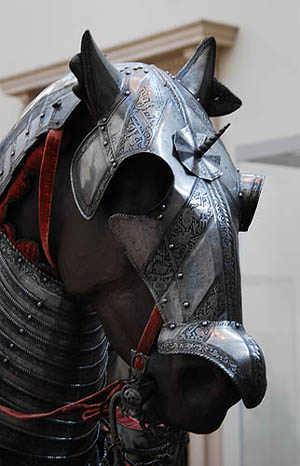
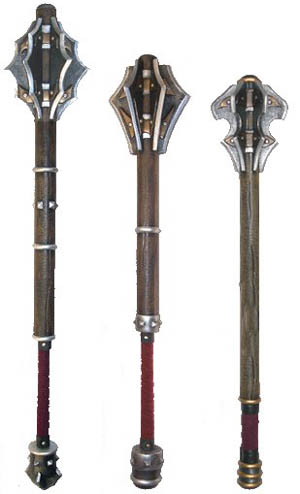
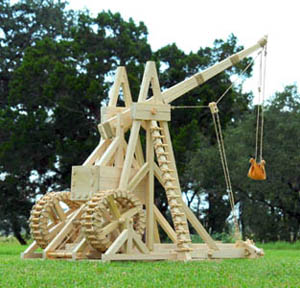
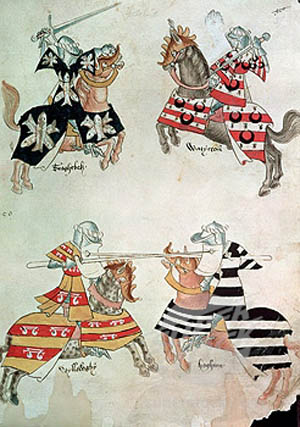
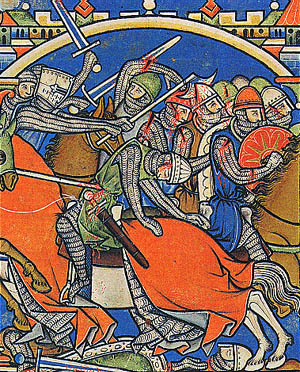
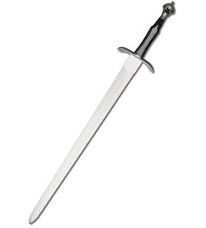
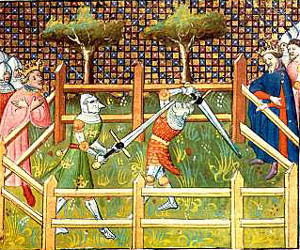

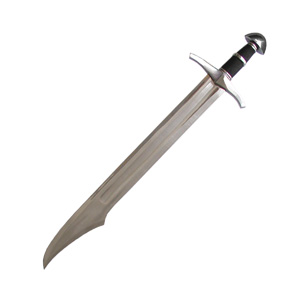
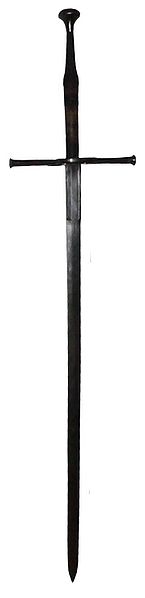
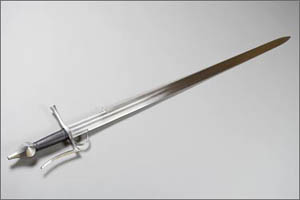
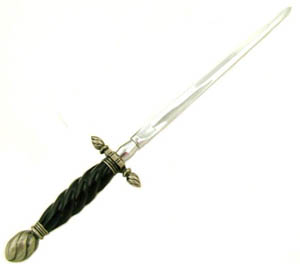
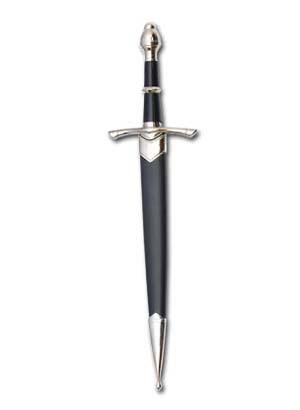
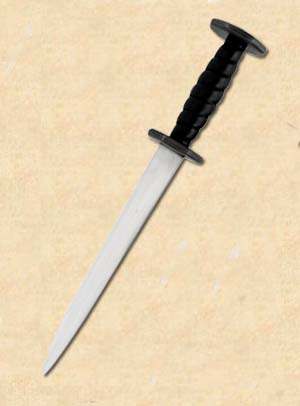
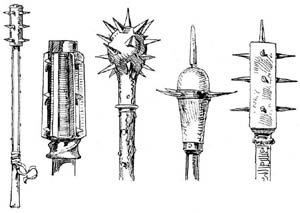
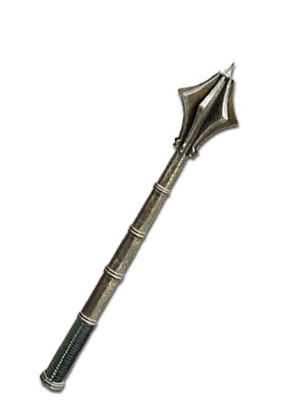
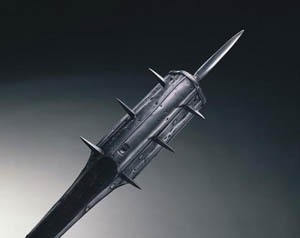
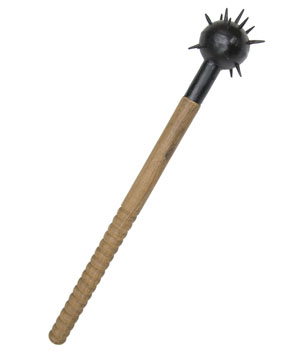
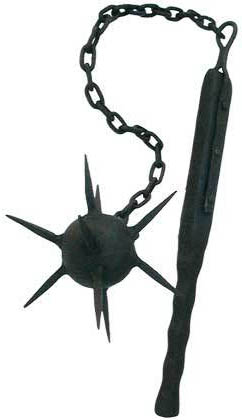
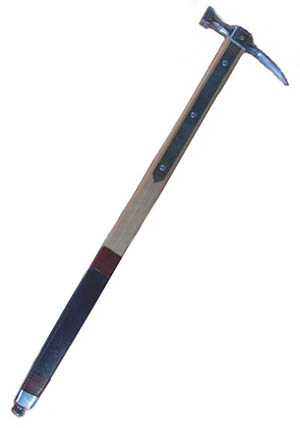
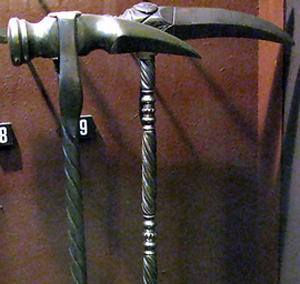
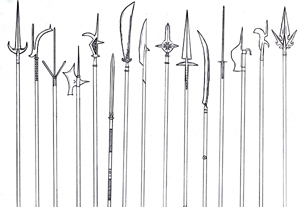
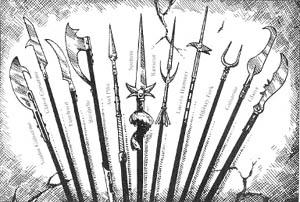
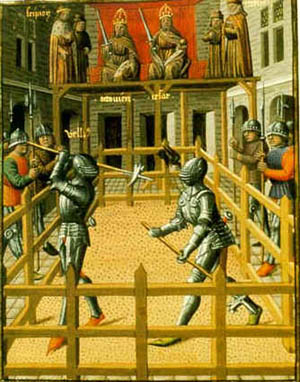
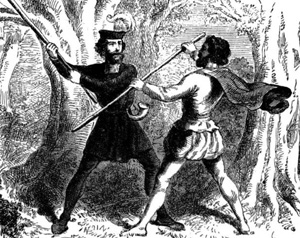
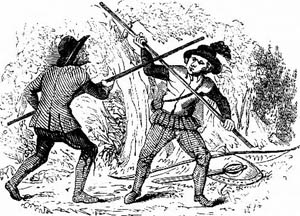
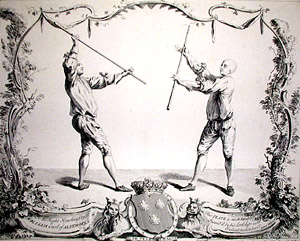
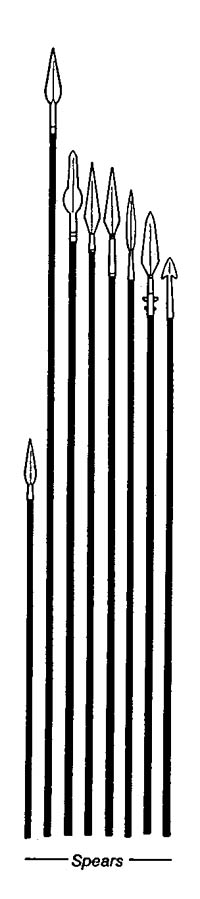 A
spear is a pole weapon consisting of a shaft, usually of wood, with
a sharpened head. The head may be simply the sharpened end of the
shaft, or it may be of another material fastened to the shaft, such
as obsidian, iron, or bronze. The most common design is of a metal
spearhead, shaped like a triangle or a leaf.
A
spear is a pole weapon consisting of a shaft, usually of wood, with
a sharpened head. The head may be simply the sharpened end of the
shaft, or it may be of another material fastened to the shaft, such
as obsidian, iron, or bronze. The most common design is of a metal
spearhead, shaped like a triangle or a leaf.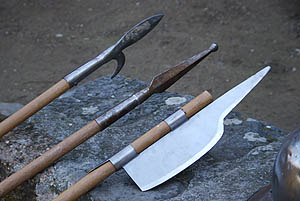
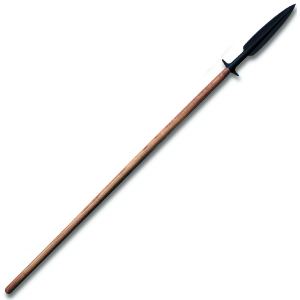
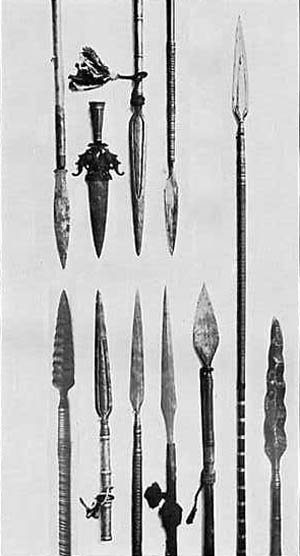
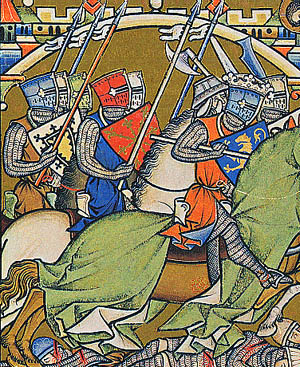
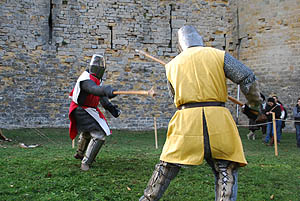
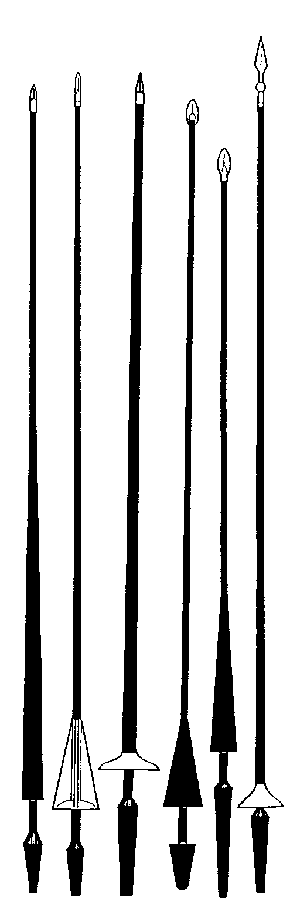
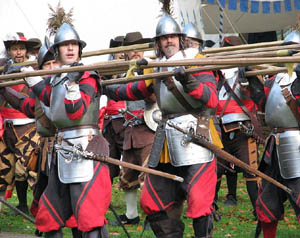
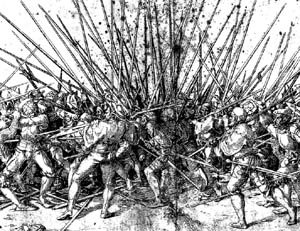
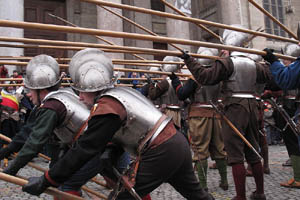
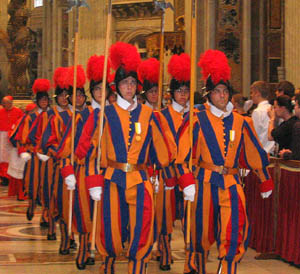
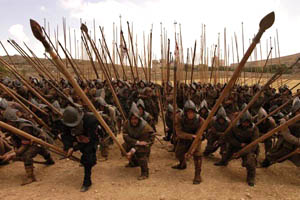
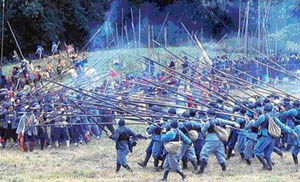
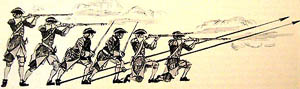
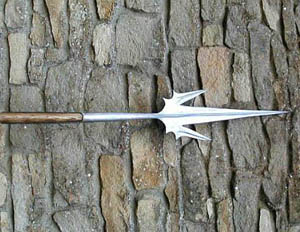
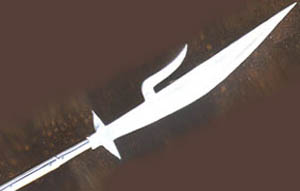
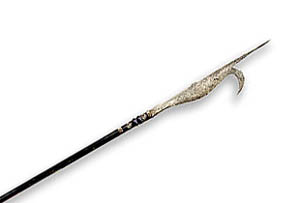
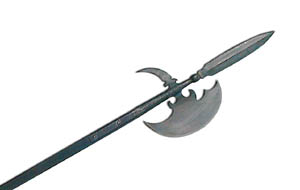
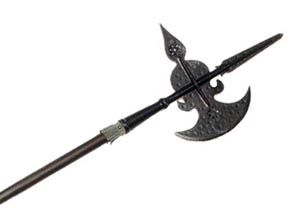
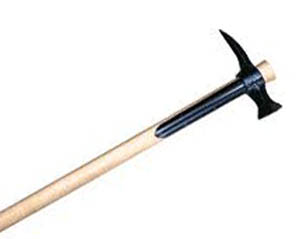
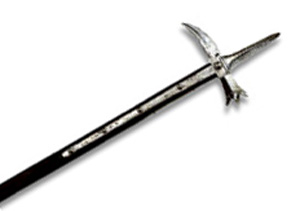
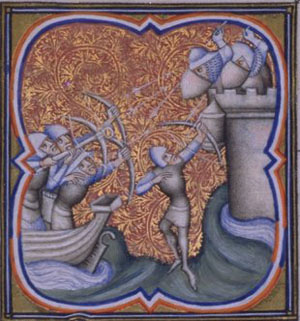
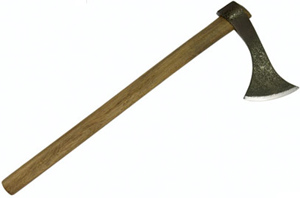
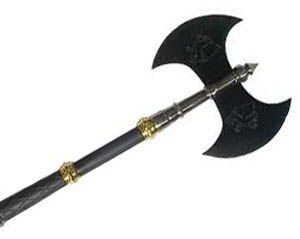

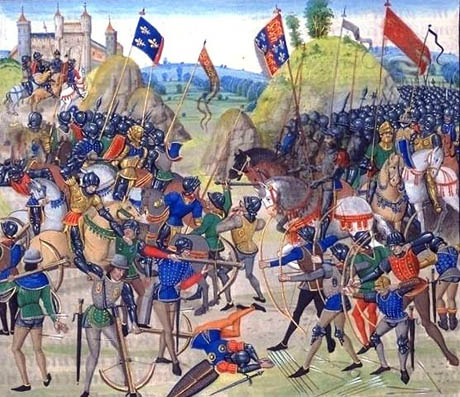
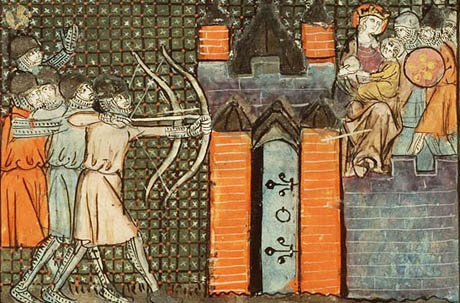
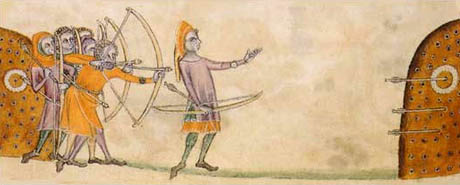
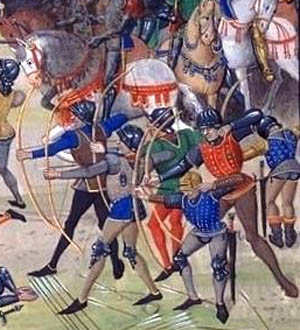
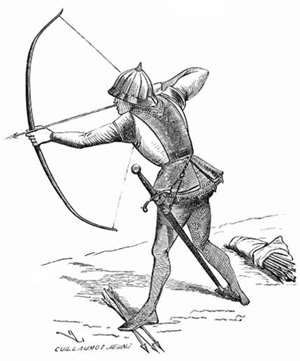
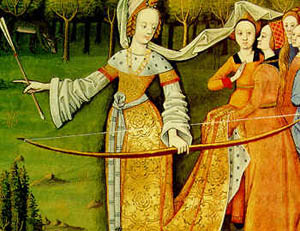
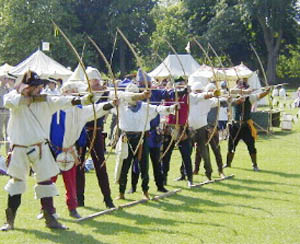
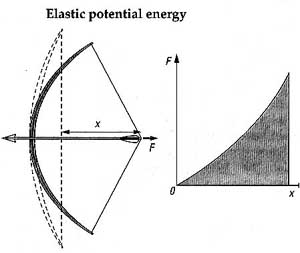
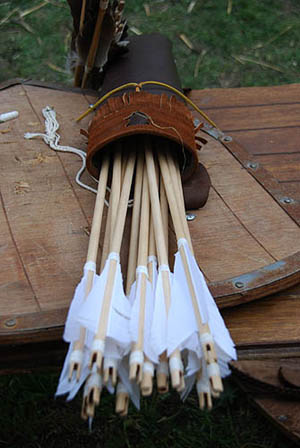
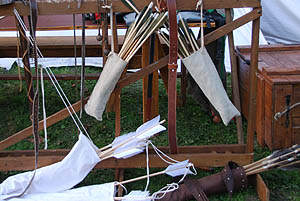
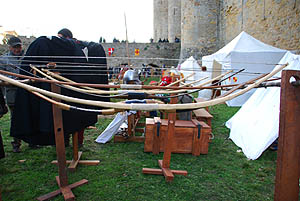
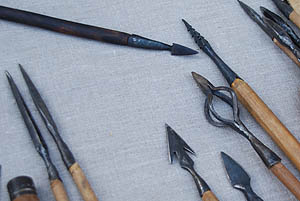
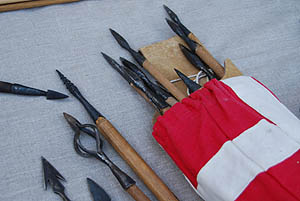
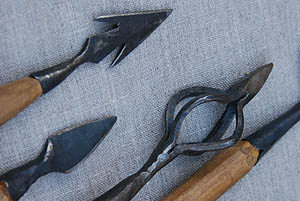
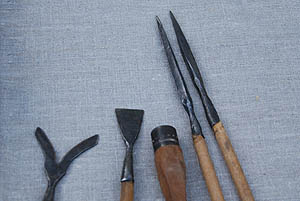
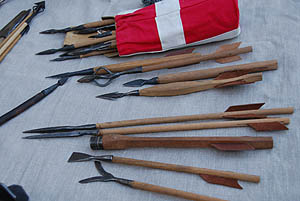
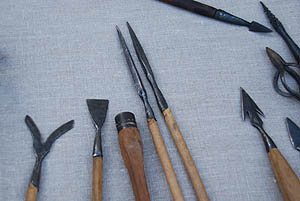
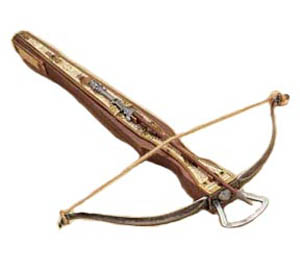
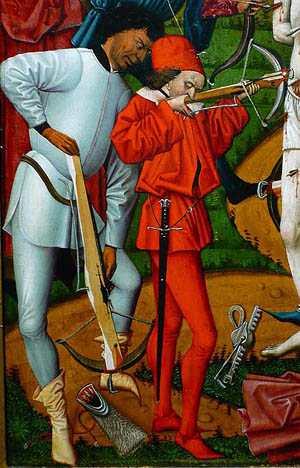
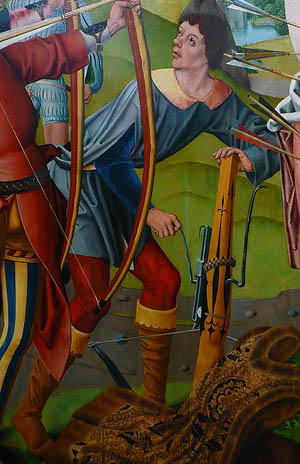
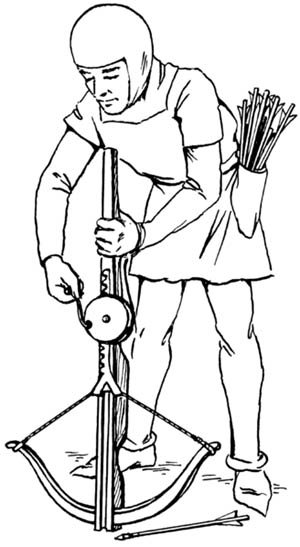
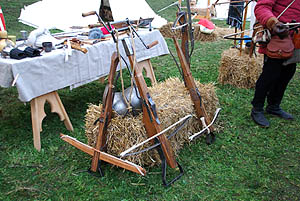
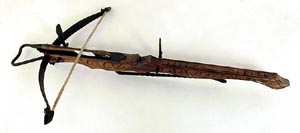
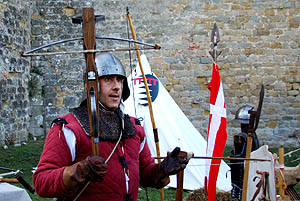
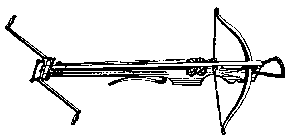
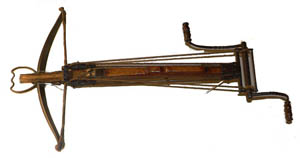
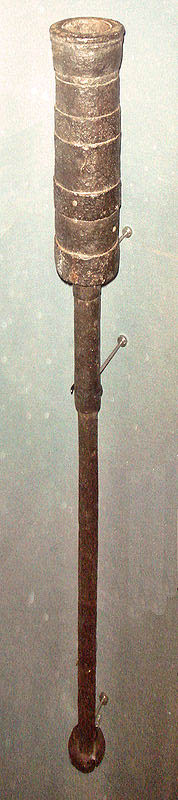

 An
arquebus was also significantly more dangerous to its user. The
arquebusier carries a lot of gunpowder on his person and has a lit
match in one hand. The same goes for the soldiers next to him. Amid
the confusion, stress and fumbling of a battle, arquebusiers are
potentially a danger to themselves. Early arquebuses tended to have
a drastic recoil. They took a long time to load unless using the
'continuous fire' strategy, where one line would shoot and reload
while the next line shot. They also tended to overheat. During repeated
firing, guns could become clogged and explode, causing pieces of
metal and wood to break off, which could be dangerous to the gunner
and even those around him. Reloading an arquebus requires finer
motor skills and movements than reloading a bow or crossbow. This
is a disadvantage in a combat situation where stress has a negative
impact on fine motor skills.
An
arquebus was also significantly more dangerous to its user. The
arquebusier carries a lot of gunpowder on his person and has a lit
match in one hand. The same goes for the soldiers next to him. Amid
the confusion, stress and fumbling of a battle, arquebusiers are
potentially a danger to themselves. Early arquebuses tended to have
a drastic recoil. They took a long time to load unless using the
'continuous fire' strategy, where one line would shoot and reload
while the next line shot. They also tended to overheat. During repeated
firing, guns could become clogged and explode, causing pieces of
metal and wood to break off, which could be dangerous to the gunner
and even those around him. Reloading an arquebus requires finer
motor skills and movements than reloading a bow or crossbow. This
is a disadvantage in a combat situation where stress has a negative
impact on fine motor skills.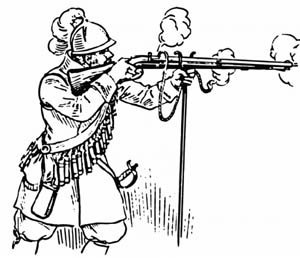
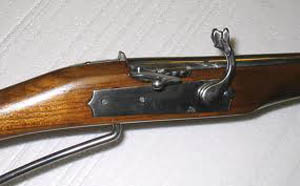


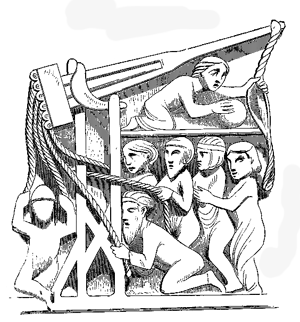
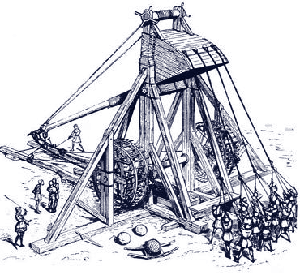
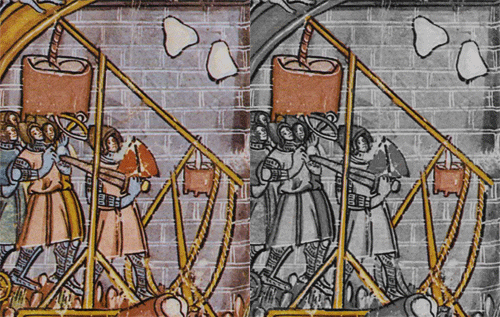
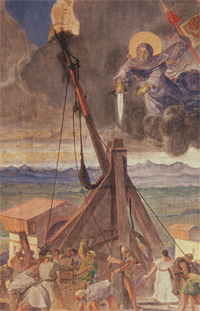
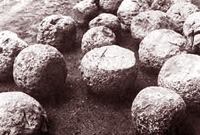
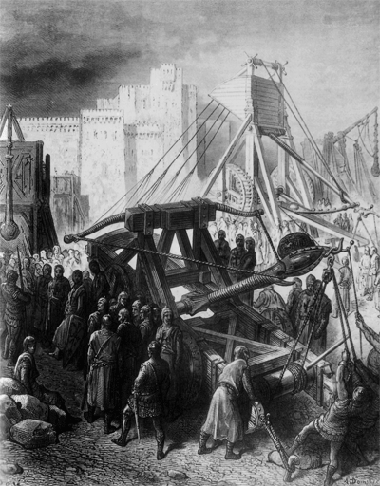
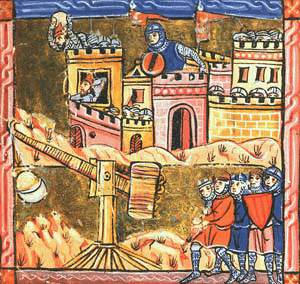
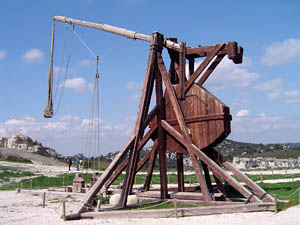
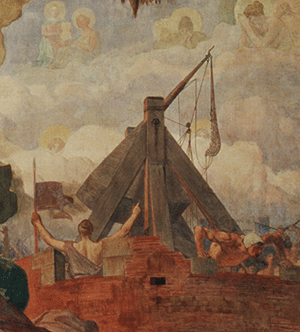

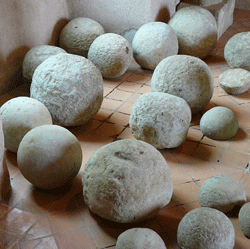

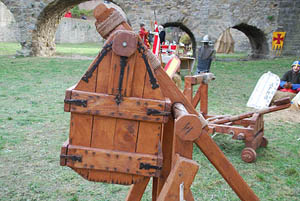
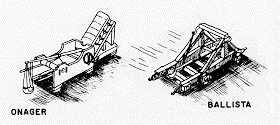 In
action the spoke was forced down, against the tension of twisted
ropes or other springs, by a windlass. It was then suddenly released.
The spoke kicked the crosspiece of the vertical frame, and the projectile
at its extreme end was shot forward. Onagers of the Roman Empire
were mainly used for besieging forts or settlements. They would
often be armed with huge stones or rocks that could be covered with
a flammable substance and set alight. The Romans greatly improved
the onager's manoeuvrability by adding wheels to its base. The wheels
and the onager's light weight made it easy to move.
In
action the spoke was forced down, against the tension of twisted
ropes or other springs, by a windlass. It was then suddenly released.
The spoke kicked the crosspiece of the vertical frame, and the projectile
at its extreme end was shot forward. Onagers of the Roman Empire
were mainly used for besieging forts or settlements. They would
often be armed with huge stones or rocks that could be covered with
a flammable substance and set alight. The Romans greatly improved
the onager's manoeuvrability by adding wheels to its base. The wheels
and the onager's light weight made it easy to move.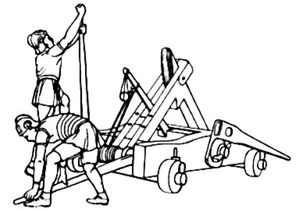
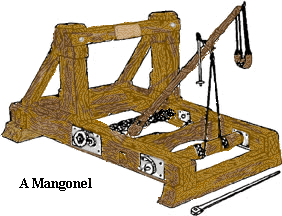
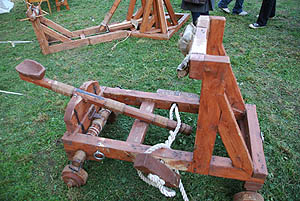
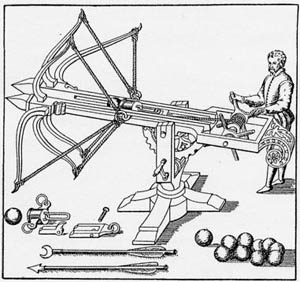
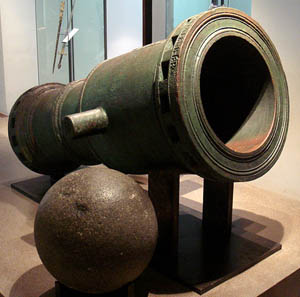
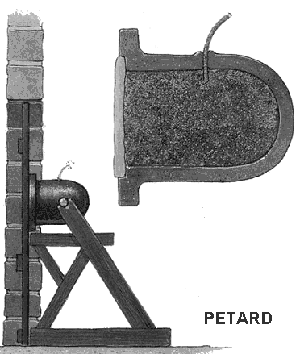

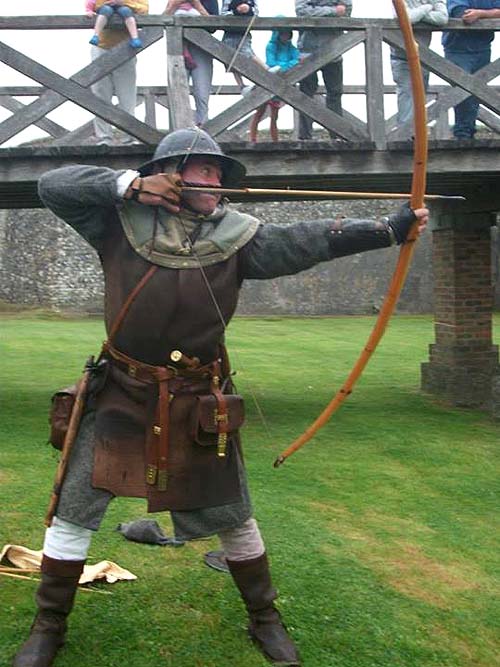
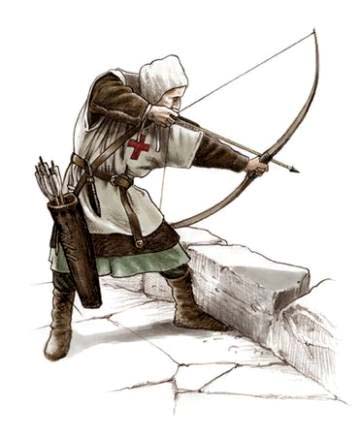
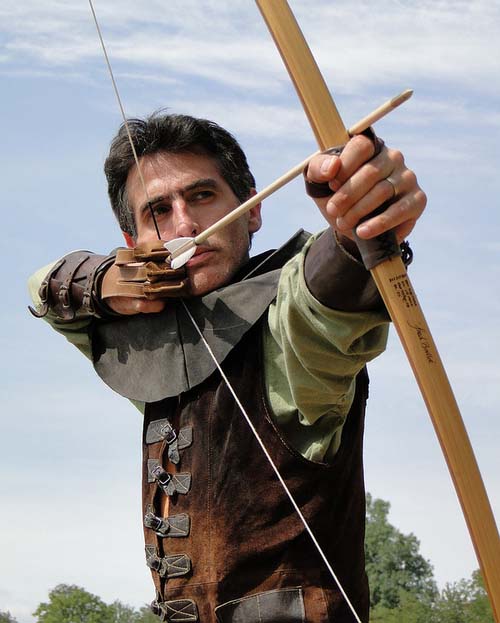
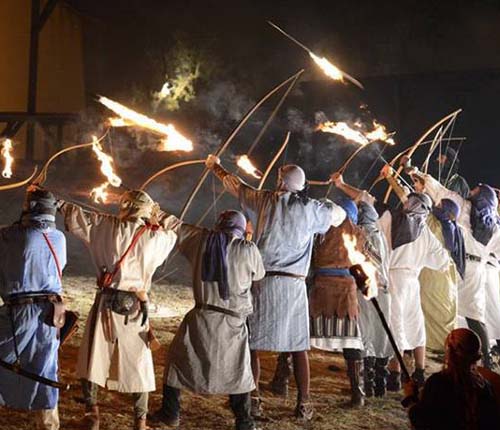
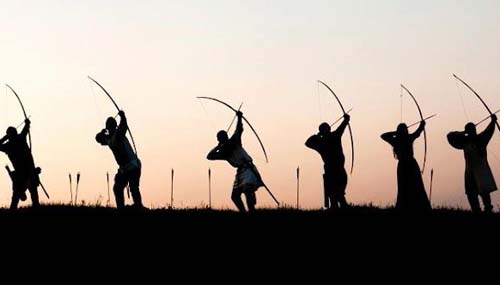
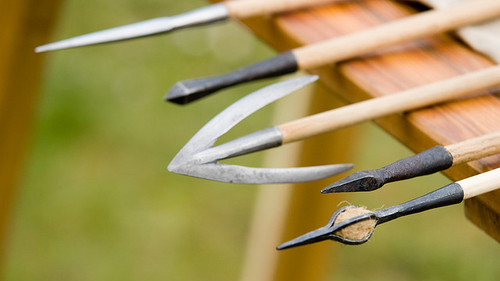
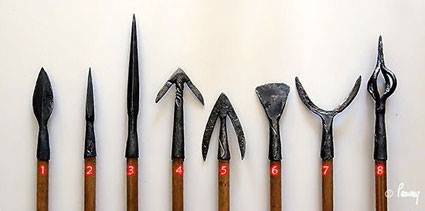
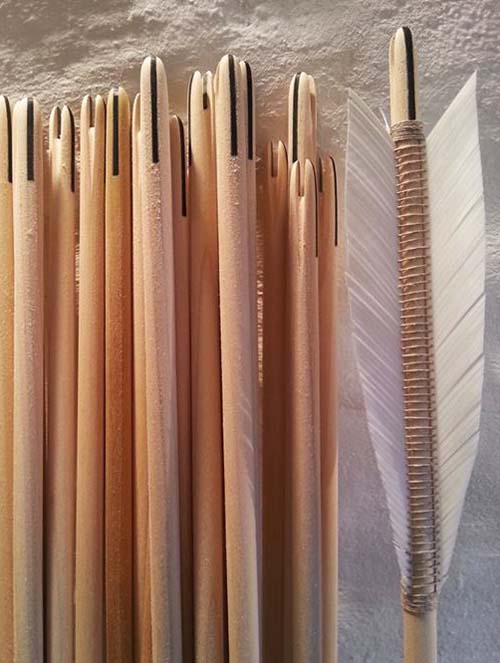
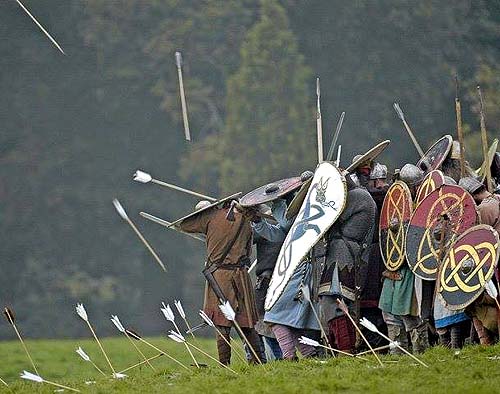
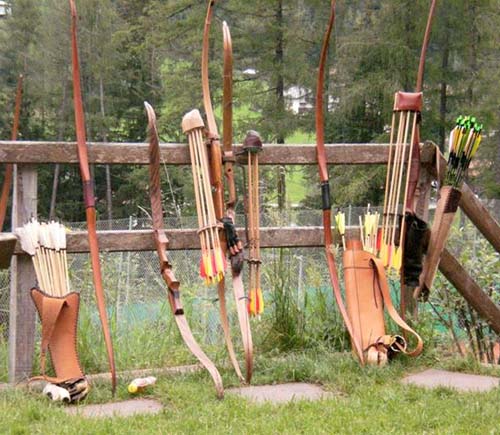
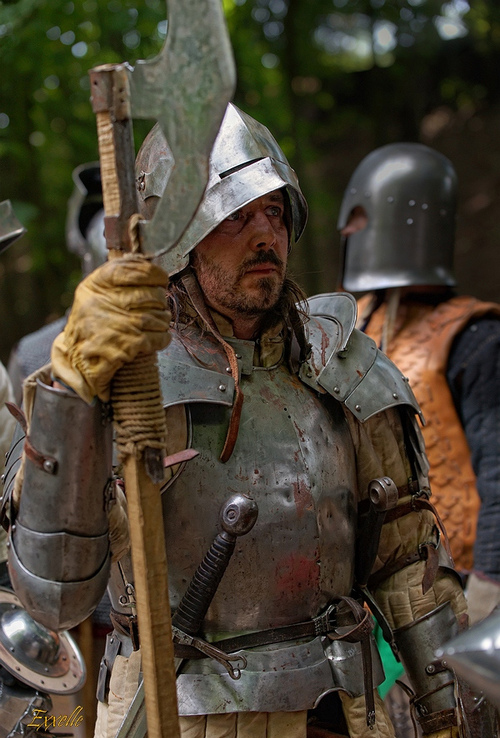
.jpg)
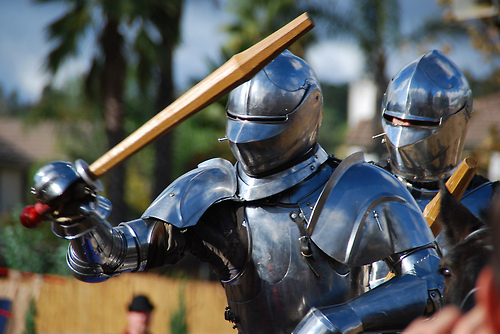
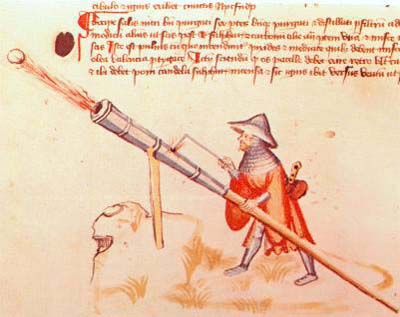
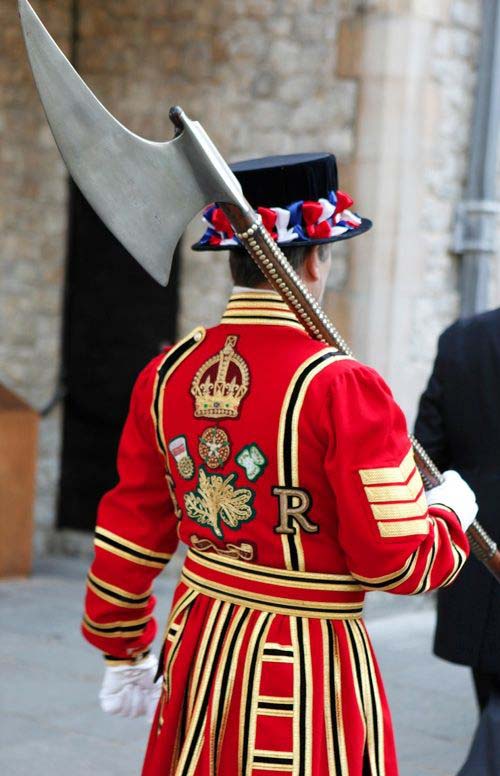
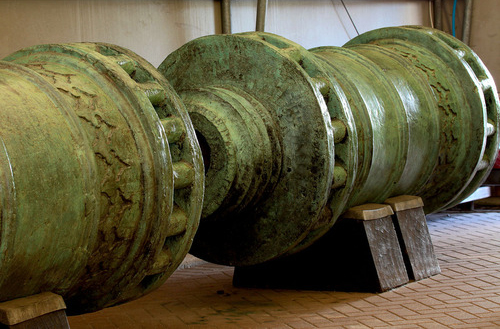
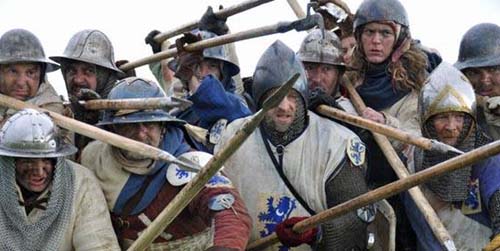
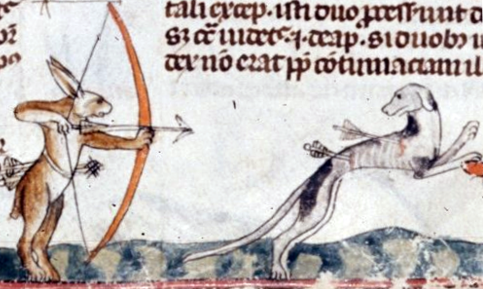
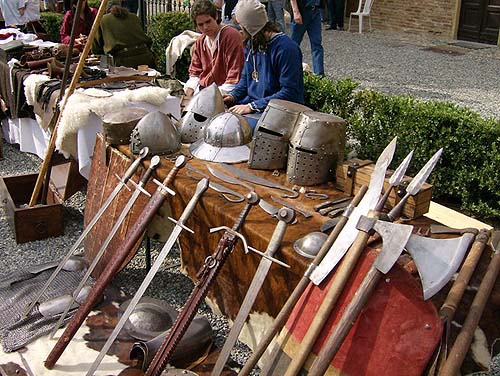
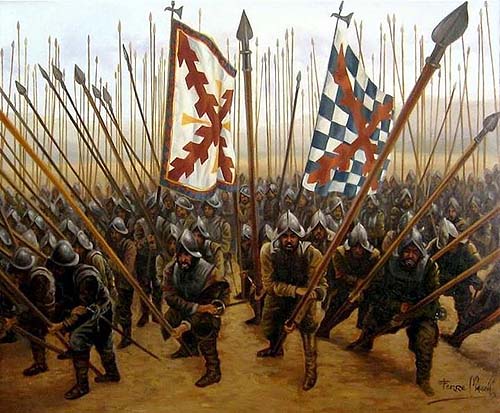
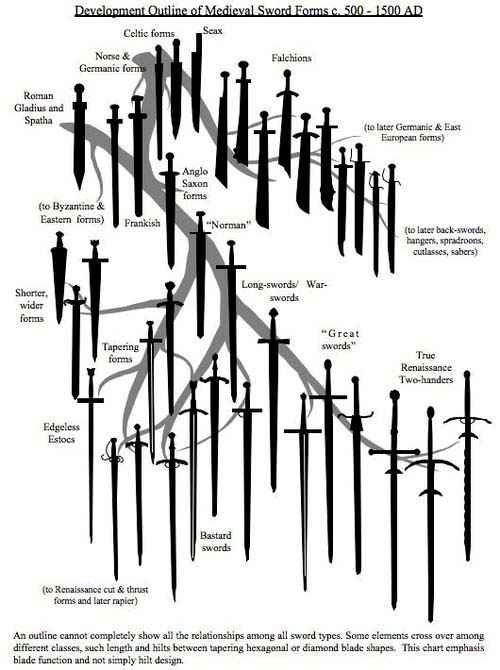
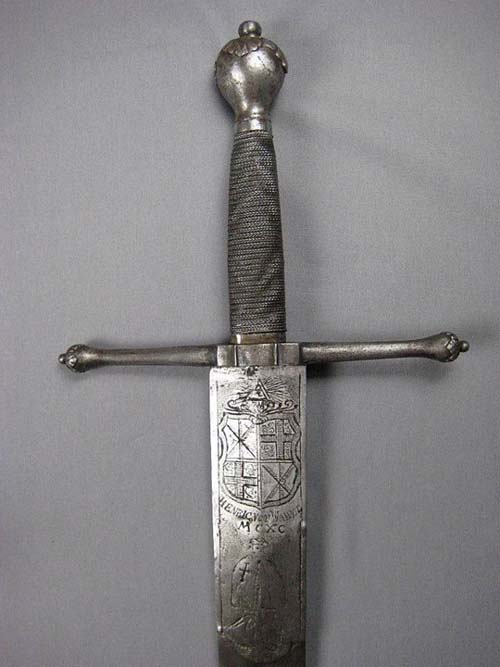
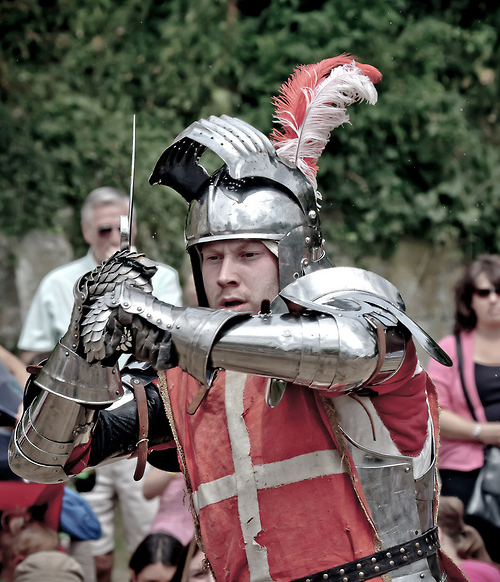
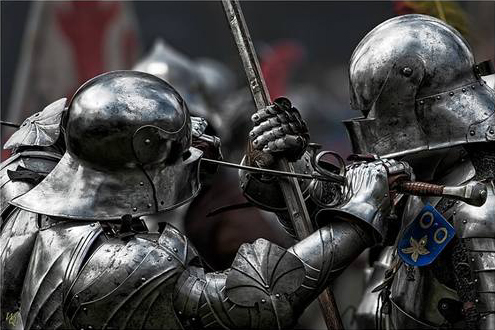
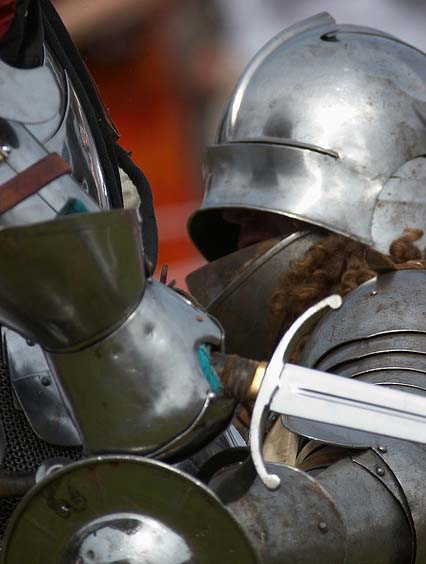
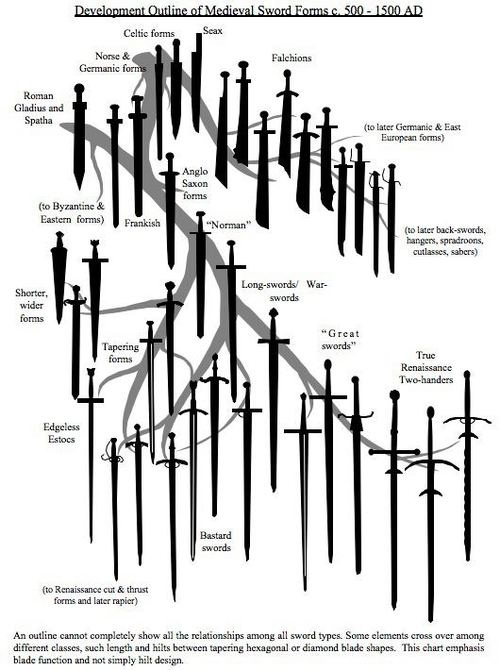
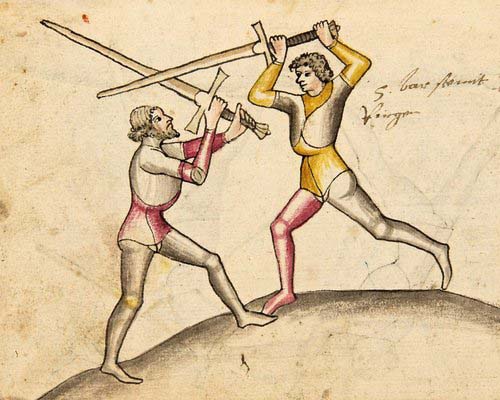
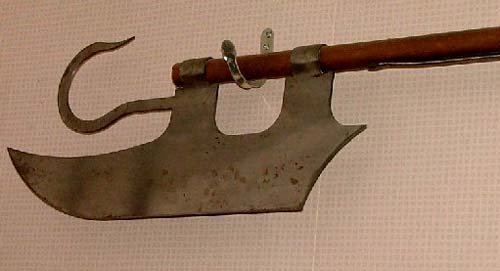
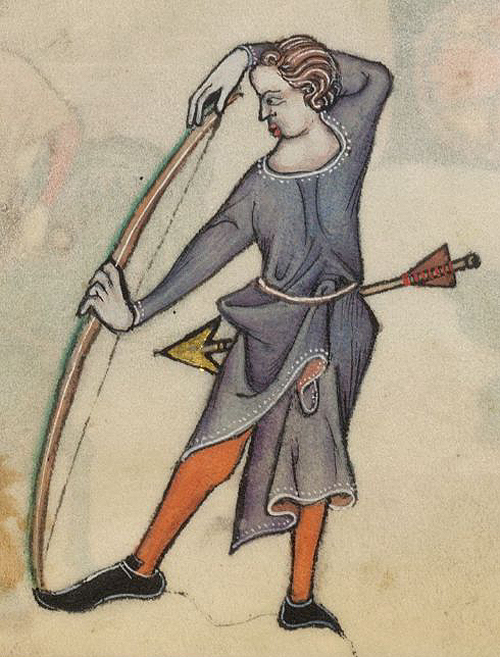
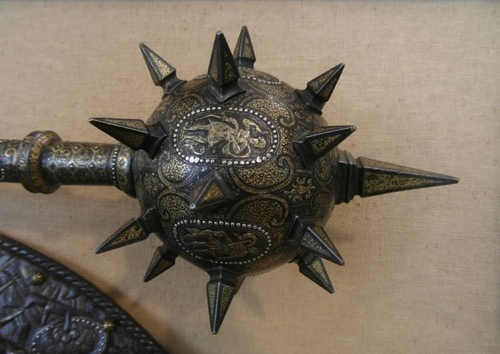
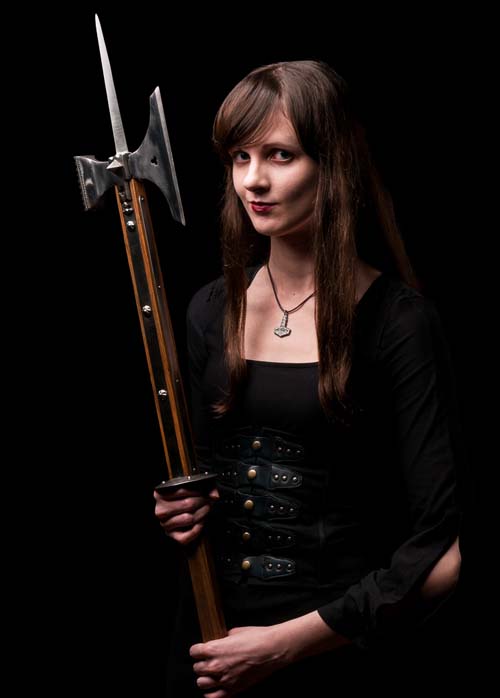
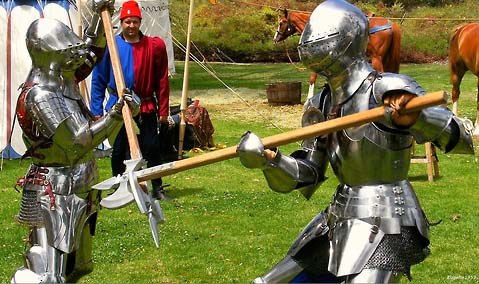

.jpg)
| MEDIEVAL WARFARE |
MEDIEVAL WEAPONS |
MEDIEVAL ARMOUR |
CRUSADES
& CRUSADERS |
TEMPLARS
& HOSPITALLERS |
WILLIAM MARSHAL |
MEDIEVAL LIFE |
MEDIEVAL RE-ENACTMENT |
MEDIEVAL TORTURE |
BOOKS |
| :::: Link to us :::: Medieval Warfare Resources ::: © C&MH 2010-2013 ::: contact@medievalwarfare.info ::: Advertising ::: |